
INSEAI Newsletter 2025/5 - Diciembre
Project & Network Highlights l December 2025
December marked the closing of an intense year for the INSEAI network, combining academic exchange, methodological advances and ongoing collective efforts around one of the project’s core pillars: the construction of a shared database on informality.
Throughout the month, lectures and discussions addressed key dimensions of informality—from measurement and sustainability to care work, tourism and digital platforms—while new podcast and video content continued to expand the network’s outreach. At the same time, the INSEAI Survey on Employment and Wages entered a crucial phase, with data collection underway across countries and an open call for broader participation from the network.
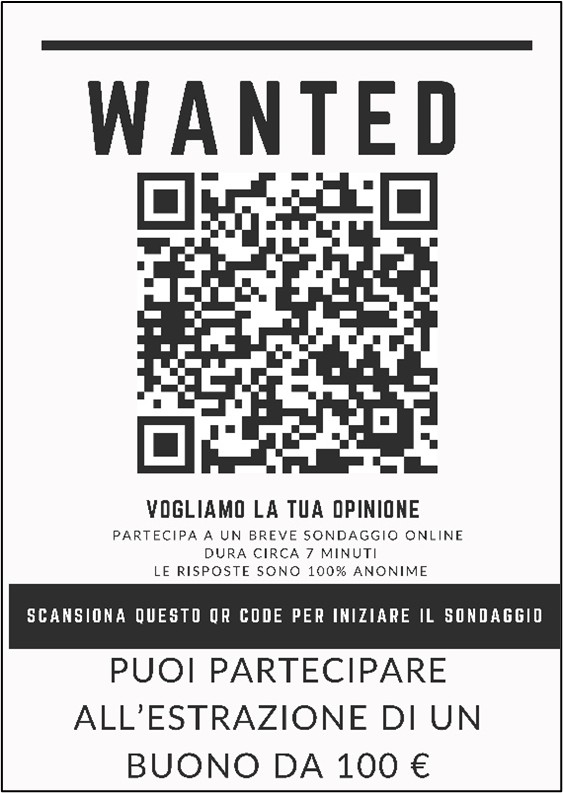
QR code linking to the INSEAI Survey on employment and wages, open to anonymous participation.
Network Cooperation: Learning and debating across universities
Several INSEAI Lectures structured the academic agenda in December.
On 15 December, a lecture hosted at Universidade Federal do Rio de Janeiro (UFRJ) and online brought together Adriana AnaMaria Davidescu and Diana Marina Agafiței (Bucharest University of Economic Studies – BUES). Their presentation introduced new advances in measuring the shadow economy in Central and Eastern Europe, combining enhanced Currency Demand Approach techniques with dynamic panel models to better capture regional dynamics.
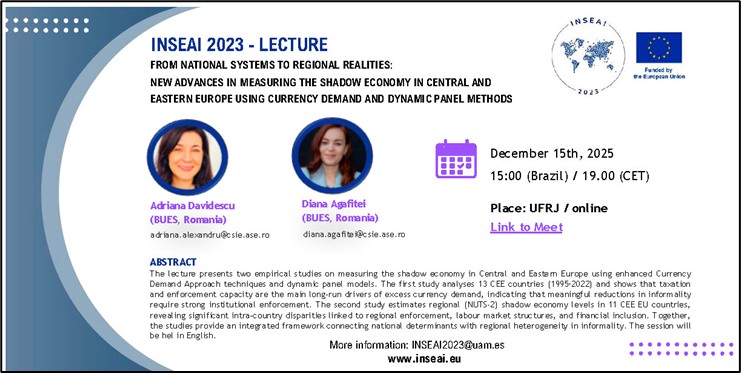
INSEAI Lecture on new approaches to measuring the shadow economy in Central and Eastern Europe, December 15.
Earlier in the month, on 11 December, Vasile Strat (BUES) delivered a lecture from Universidad Católica Argentina (UCA) examining how informality affects ESG scores in Europe. The session explored the role of institutional weaknesses linked to informal activity and their implications for sustainability assessments and policy design.
On 12 December, the University of Valencia hosted a lecture by María Leonela Artavia and Shirley Benavides (Universidad Nacional de Costa Rica – UNA), focusing on the implications of unpaid care work for labour market participation, informality and female poverty. The discussion highlighted the gendered dimensions of informality and their relevance for social and labour policies.
Discussion Series
The INSEAI Discussion Series remained particularly active in December, with a strong focus on Costa Rica.
On 9 December, María Leonela Artavia presented an analysis of job insecurity among delivery workers for digital platforms in the Costa Rican Metropolitan Area. Based on survey data covering six dimensions of job insecurity, the discussion placed the Costa Rican case within broader global debates on digitalisation, labour rights and regulatory responses.
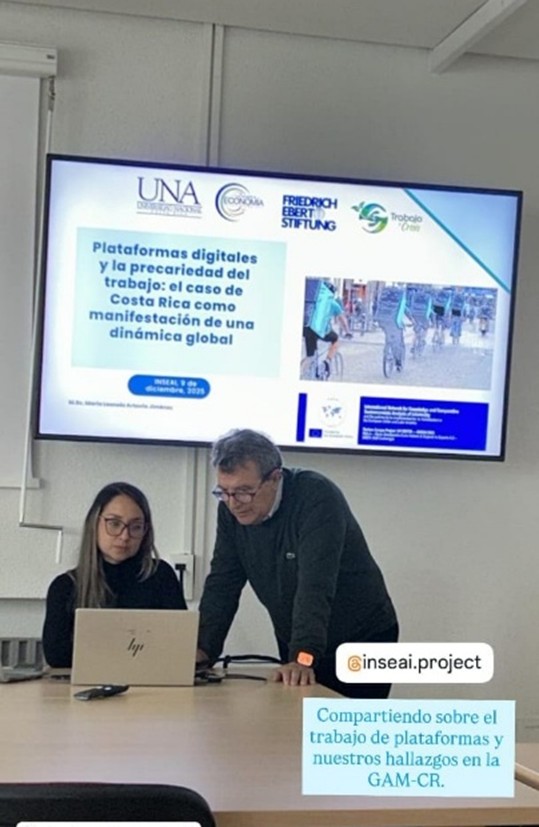
María Leonela Artavia presenting her research on job insecurity among digital platform delivery workers in Costa Rica during an INSEAI Discussion held on 9 December, with Professor Santos Ruesga, INSEAI project coordinator, also taking part in the session.
Later, on 17 December, Shirley Benavides led a discussion on informal employment in tourism-related activities in Costa Rica’s Central Pacific region. The study examined working conditions, occupational health risks, environmental impacts and institutional barriers to formalisation in a region characterised by high inequality and persistent informality. The session adopted a multidisciplinary and mixed-methods approach and included simultaneous translation to facilitate participation.
INSEAI Survey: Data Collection Underway
Data collection for the INSEAI Survey on Employment and Wages continued throughout December. While several hundred questionnaires have already been completed, participation remains uneven across countries, making the involvement of the entire network especially important at this stage.
The survey is multilingual and open to a wide range of respondents, with particular emphasis on reaching contexts where informality is more widespread. To encourage participation, the survey includes a prize draw of €100 Amazon gift cards, and dissemination through personal, institutional and social networks is strongly encouraged.
New Initiatives: Podcasts & Testimonies
The Christmas period, with increased social interaction, offers an opportunity to further expand outreach and help strengthen the empirical foundation of the INSEAI database.
December also brought new audiovisual content.
A new episode of INFORMAL TALKS, the INSEAI podcast, featured Pablo Granovsky, who reflected on work in the digital economy, the role of trade unions and public policies, and the challenges of achieving a fair technological transition. The episode is available on YouTube and Spotify.
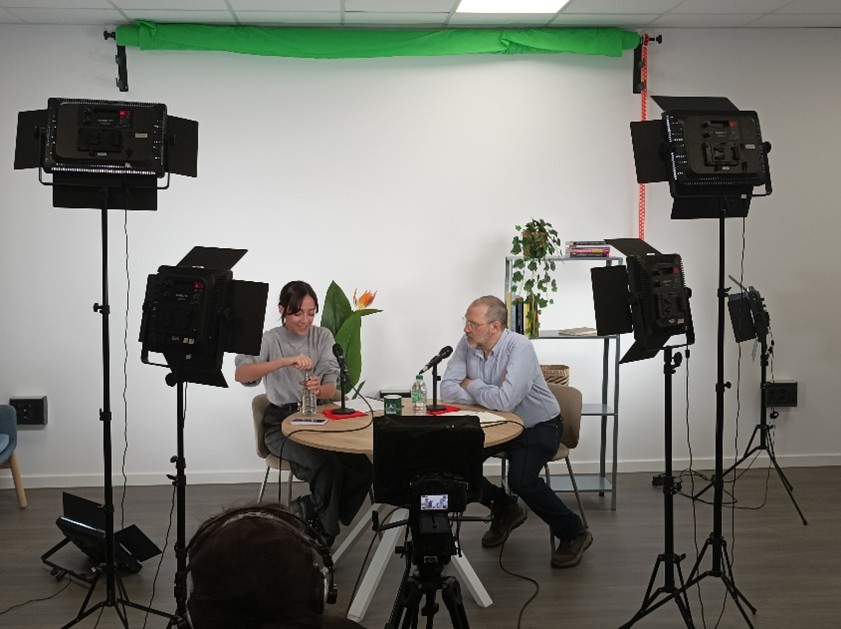
Behind the scenes of the INSEAI podcast INFORMAL TALKS, with Pablo Granovsky.
In addition, the INSEAI Testimony Collection expanded with a new contribution by Matthias Schulze-Böing (GEWAK, Germany), adding further comparative insight into national experiences of informality and labour market governance.
Looking Ahead: Academic Networks and Conferences
As the year comes to a close, attention also turns to upcoming international academic events. In this context, the SASE Conference, to be held in Bordeaux in July 2026, represents an important opportunity for members of the INSEAI network to engage with broader debates on socio-economics, labour and institutions, and to disseminate project-related research in an international forum.
Cultural Corner: Recommended Reading
The Precariat: The New Dangerous Class (Guy Standing; Bloomsbury, 2021).
This widely read book explores the rise of the “precariat” as a global social class shaped by insecure, informal and unstable forms of work. Written in an accessible style, it connects labour market transformations, informality and social policy, offering a broad framework that remains highly relevant to current debates on work and inequality.

Guy Standing’s The Precariat, a key reference on labour insecurity and precarious work. Bloomsbury (2021).
Contact & Stay Connected
Website: www.inseai.eu
Email: newsletter@inseai.eu
LinkedIn: https://www.linkedin.com/in/inseai-project-471875371
Instagram: https://www.instagram.com/inseai.project/
Facebook: https://www.facebook.com/people/Inseai/61576239562950/
YouTube: https://www.youtube.com/@INSEAI-PROJECT
Spotify: https://open.spotify.com/
Calendar l Upcoming Events: https://www.inseai.eu/es/eventos
Newsletter: newsletter@inseai.eu
- Newsletter Team: Matías Membiela-Pollán (Coord.), Xose Picatoste-Novo, Sandrina Teixeira.

International Network for Knowledge and Comparative Socioeconomic Analysis of Informality and the Policies to be Implemented for their Formalization in the European Union and Latin America
Horizon Europe Project 101182756 — INSEAI 2023