
INSEAI Newsletter 2025/2 - September
Project & Network Highlights – September 2025
September was a particularly dynamic month for the INSEAI Network. From international conferences to coordination meetings and the launch of a new podcast, the network continued to consolidate its role as a reference space for the multidimensional analysis of labor informality in Europe and Latin America.
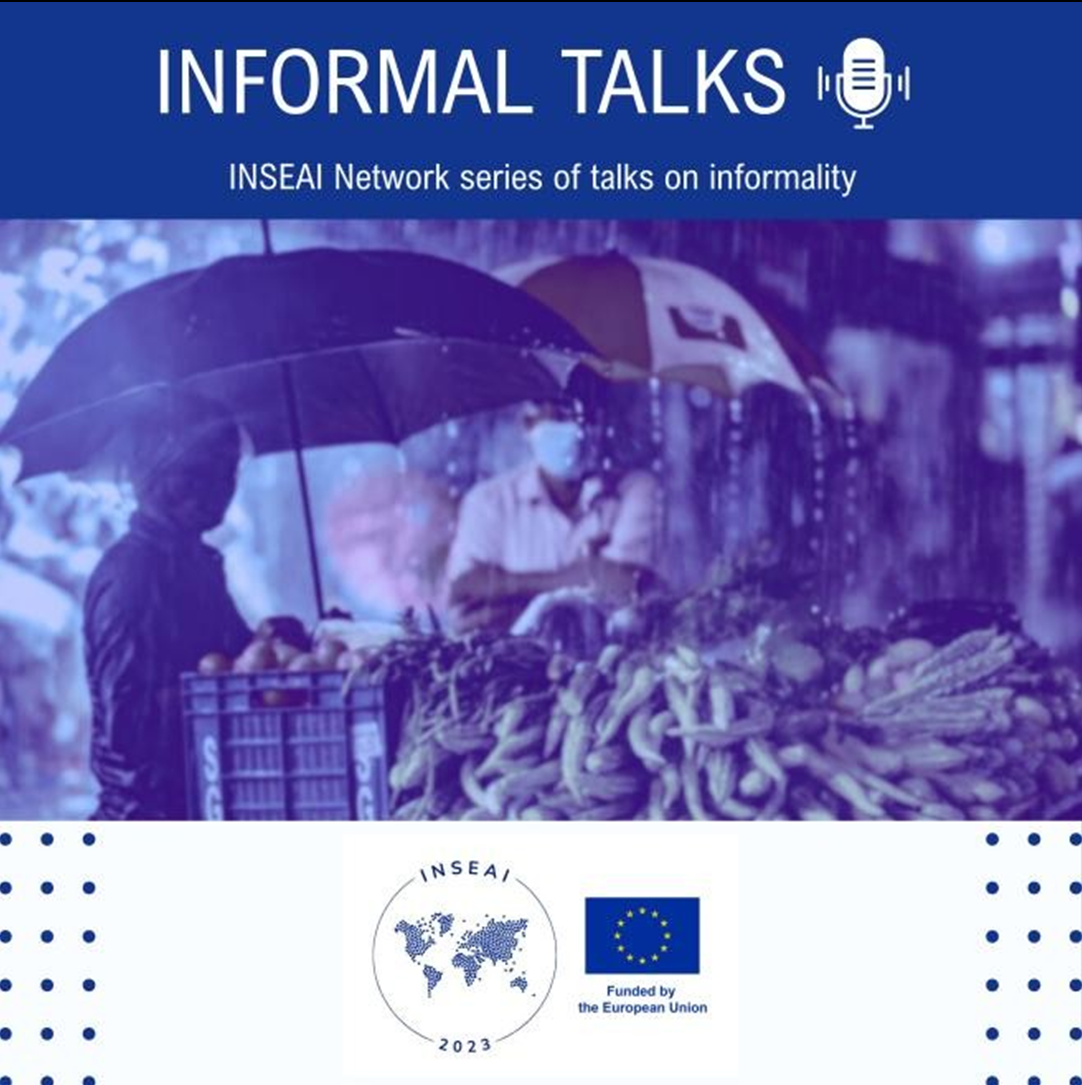
Informal Talks, created to bring the voices of the INSEAI Network closer to wider audiences through a fresh and accessible format.
Event Spotlight: INSEAI at the Shadow Conference 2025 | Warsaw
The 9th edition of the Shadow Economy, Tax Behaviour and Insights from Big Data Conference gathered specialists in shadow economy, taxation, and institutions in Poland.
Roberto Dell’Anno (UNISA) and Adriana Davidescu (BUES) represented our network, presenting research on tax evasion, informality, and the opportunities offered by big data for analysis and policymaking.
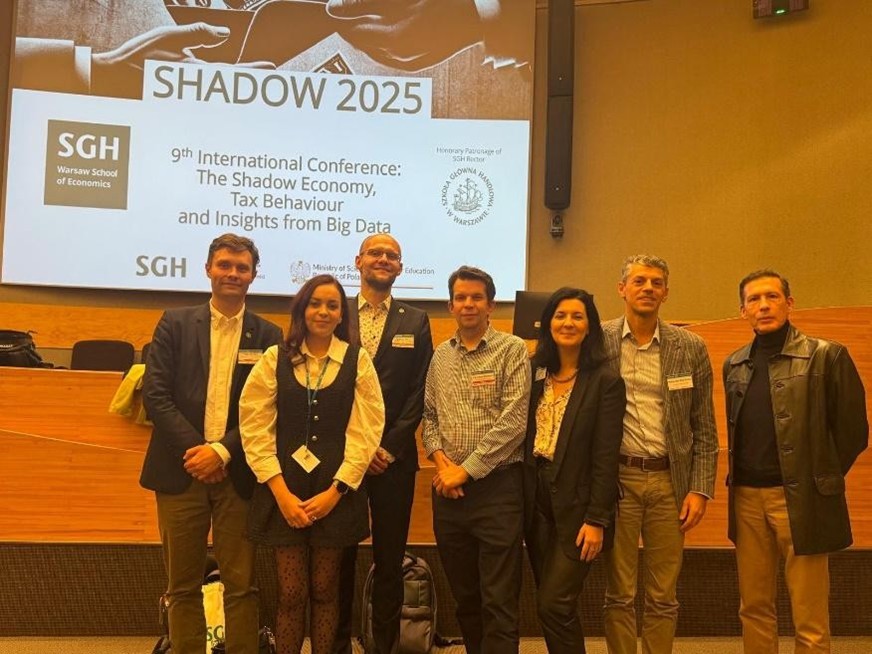
INSEAI representatives at the 9th Shadow Economy Conference (Warsaw, September 25–28, 2025). The event focused on tax behaviour, big data, and the dynamics of informality. Roberto Dell’Anno (UNISA) and Adriana Davidescu (BUES) presented INSEAI research contributions on shadow economy, fiscal compliance, and institutional trust.
Network Cooperation: Strengthening cooperation in the Iberian Peninsula
On 11 September, our coordinator Santos Ruesga met in A Coruña with colleagues from the Universidade da Coruña (UDC) and the Polytechnic Institute of Porto (IPP). The meeting marked the beginning of a new INSEAI digital application, a tool designed to collect interactive information on informality.
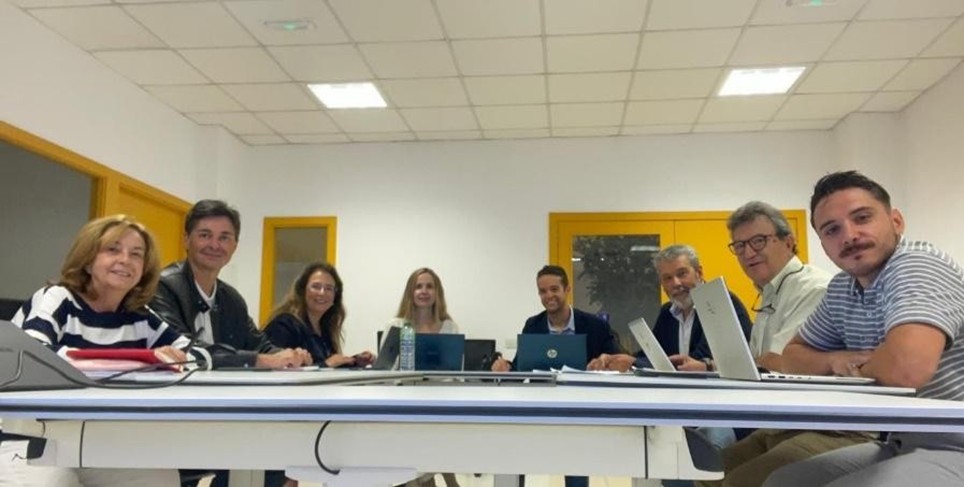
Working meeting at the Universidade da Coruña. From left to right: Isabel Novo-Corti and Matías Membiela-Pollán (UDC), Anabela Mesquita and Sandrina Teixeira (IPP), Xose Picatoste and Félix Blázquez Lozano (UDC), together with INSEAI Coordinator Santos Ruesga and Javier Baquero (UAM).
A few days earlier, on 9 September, Prof. Ruesga also met with the team at the Universitat de València, reviewing together the objectives and achievements of the project, and reinforcing the interdisciplinary cooperation that defines our network.
The working session brought together Raúl Lorente Campos and Empar Aguado (Department of Sociology and Social Anthropology), along with Josep V. Pitxer and Óscar Muñoz (Department of Applied Economics), to review Work Package 1 and plan the upcoming First INSEAI Workshop (UFF, Brazil, November 20–21, 2025).
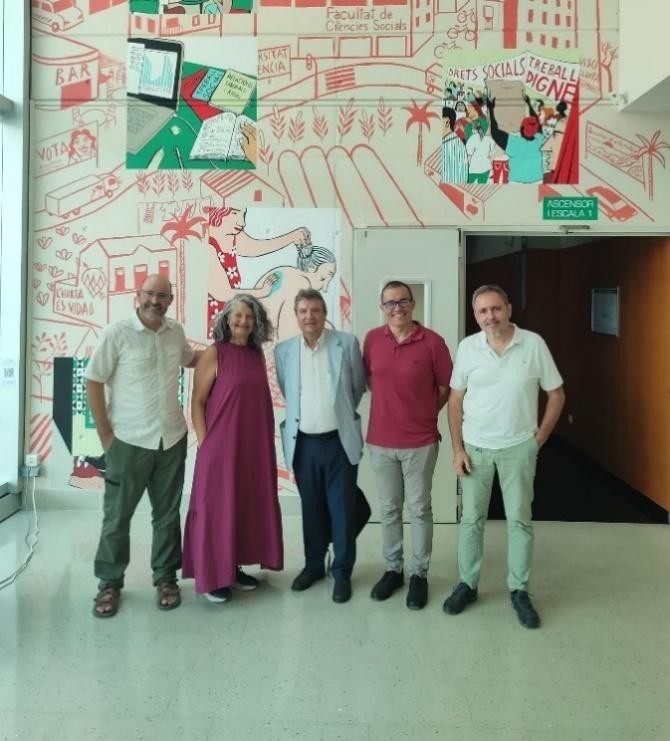
From left to right: Raúl Lorente, Empar Aguado, Santos M. Ruesga, Oscar Muñoz and Josep V. Pitxer.
Seminars and Conferences
Ana de la Puebla (UAM): The regularisation of work provided through platforms. The Spanish experience. Two teaching sessions (18 and 25 September) analysed the measures adopted in Spain and the EU to face the challenges of platform-based work.
Condiciones de empleo y salud: medir y estudiar los impactos de la precariedad laboral y la informalidad. Hosted by the Universidad Nacional de Costa Rica on 25 September, with Dr. Alejandra Vives Vergara (Pontificia Universidad Católica de Chile). The conference explored the impact of job insecurity and informality on health, bridging research and public policy debates.
Lecture UV – UCA/UBATEC (29 September): “Heterogeneidad productiva, mercados de trabajo segmentados e informalidad laboral en contexto de la globalización. El enfoque estructuralista de CEPAL”. Delivered by Agustín Salvia and Ianina Tuñón (UBATEC, UCA, Argentina) at the Universitat de València, this session addressed the structural roots of segmented labor markets and their implications for inequality.
New Initiatives: Launch of Informal Talks
September also marked the launch of our official podcast, designed to bring discussions on informality to a wider audience.
The first episode, available on YouTube and Spotify, explores the conceptual differences around informality in Europe and Latin America, featuring Esteban Nina, Jaime Ramírez (PUJ, Colombia), and Santos M. Ruesga (UAM, Spain). The production team, led by UAM with the support of UBATEC (Argentina) and DESH (Colombia), is already working on new episodes that will combine thematic debates with fresh perspectives from across the network.
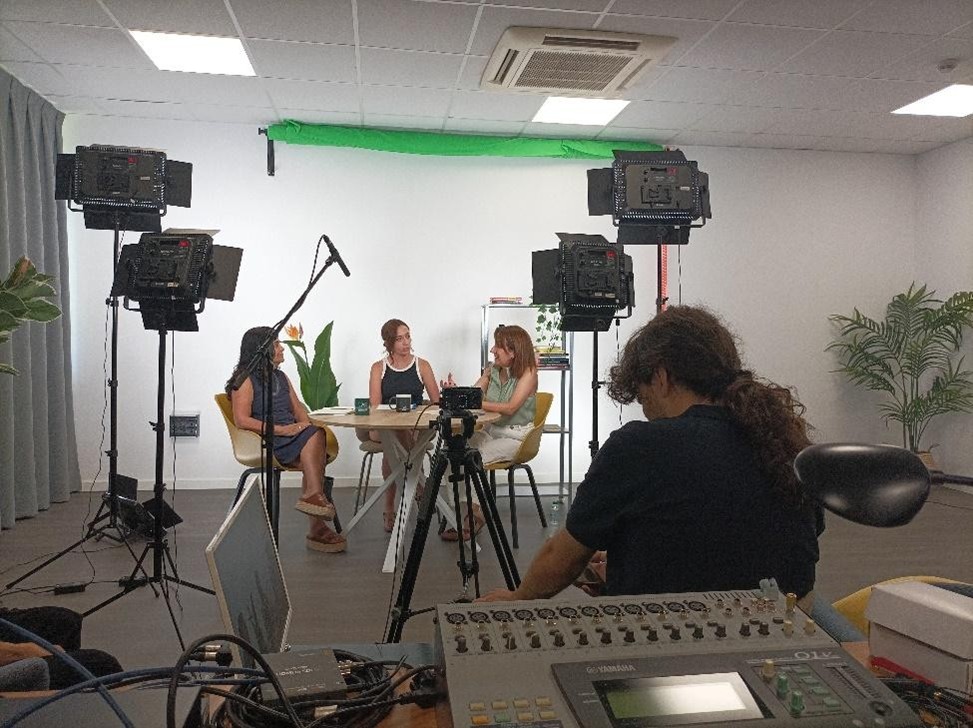
Behind the scenes of the recording of Informal Talks, the INSEAI Network’s new podcast series. From left to right: Fernanda Wanderley (Universidad Católica Boliviana), Laura Vidal (Universidad Autónoma de Madrid), and Ana de la Puebla (Universidad Autónoma de Madrid).
Cultural Corner: Recommended Reading
De Toledo Piza, D. (2025). Beyond Informality: How Chinese Migrants Transformed a Border Economy. Stanford University Press.
This book examines the layered roles of Chinese migrants in South America’s largest informal economy of counterfeit and smuggled goods, from Ciudad del Este (Paraguay) to São Paulo (Brazil).
At the bottom of the hierarchy, many Chinese vendors face double precarity—irregular immigration status combined with illicit economic activities—often absorbing the risks without enjoying the rewards. At the top, a transnational elite leverages wealth and influence to exploit legal loopholes and profit from irregular markets.
De Toledo Piza shows how law both constrains and enables these actors and argues that global structural inequalities push migrants into informality while also granting them unexpected power to reshape markets and challenge entrenched hierarchies in the Global South
INDEX
Introduction: Informality, Accumulation, Capture
- The Making of a Commercial Borderland: Overseas Chinese Importers in a Trade Outpost
- Capturing Wealth: Chinese Vendors, Shifting Legality, and Shopping Tourism in São Paulo
- Entrepreneurialism from Afar: Engaging Migrants' Associations and Implementing China's Trade Policies
- Spaces of Illegality, Tactics of Legibility: Cross-Border Mobility and Translocal Emplacement Conclusion: Subverting Exploitation
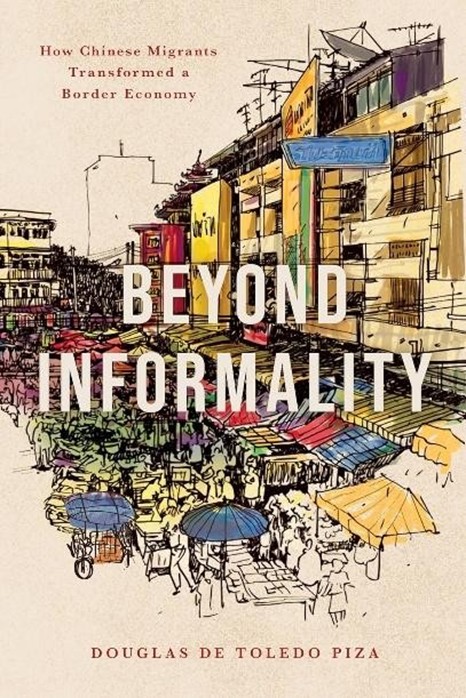
Source: Stanford University Press (2025).
Contact & Stay Connected
Website: www.inseai.eu
Email: newsletter@inseai.eu
LinkedIn: INSEAI Project
Instagram: @inseai.project
Facebook: INSEAI on Facebook
YouTube: INSEAI Project on YouTube
Spotify: Spotify
Calendar Upcoming Events: https://www.inseai.eu/es/eventos

International Network for Knowledge and Comparative Socioeconomic Analysis of Informality and the Policies to be Implemented for their Formalization in the European Union and Latin America
Horizon Europe Project 101182756 — INSEAI 2023