
INSEAI Newsletter 2026/9 - September
Project & Network Highlights l September 2026
September marked the return to a particularly active academic rhythm across the INSEAI network, with lectures, research exchanges, secondment activities and new dissemination initiatives taking place across Europe and Latin America.
Digitalisation and the changing nature of informality emerged as one of the recurring themes of the month. From digital platforms and new forms of work to the increasingly blurred boundaries between formal and informal employment, several activities reflected the need to understand informality in the context of technological and institutional change.
At the same time, September continued to demonstrate the geographical reach of the network. Activities involving researchers and partner institutions in Spain, Portugal, Germany, Argentina, Paraguay, Mexico and other participating countries strengthened the comparative and international dimension at the heart of INSEAI.
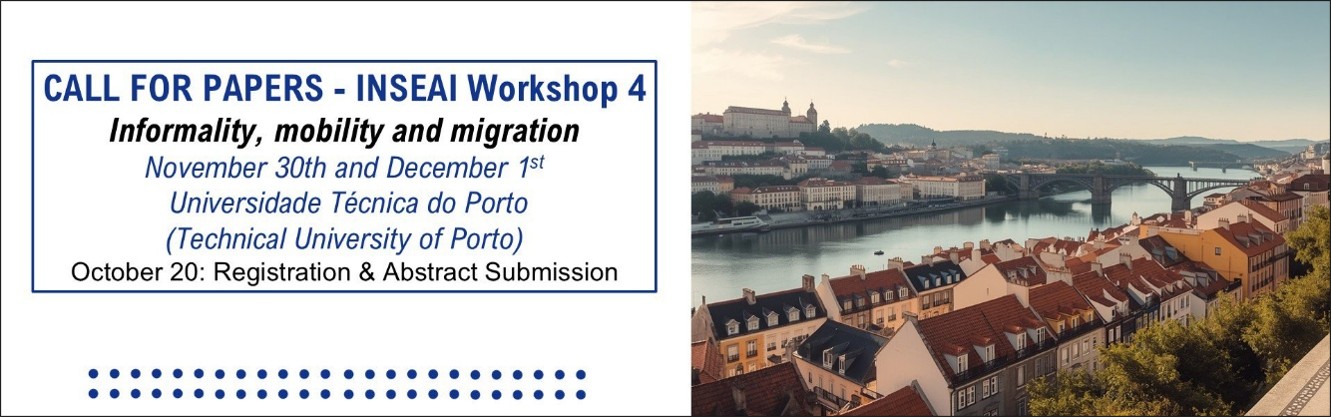
Call for Papers for the 4th INSEAI Workshop, “Informality, Mobility and Migration”, to be held in Porto on 30 November and 1 December 2026.
The month also brought new opportunities for exchange and dissemination, including a new episode of Informal Talks, further contributions to the INSEAI testimony series and preparations for the forthcoming workshops in A Coruña and Porto.
With the new academic year under way, September thus opened a particularly active period for the network, combining ongoing research and mobility with an increasingly intense programme of scientific exchange.
Network Cooperation
International cooperation continued to develop throughout September, with secondments and academic exchanges strengthening links between INSEAI partner institutions in Europe and Latin America.
At the Universitat de València, the secondment of Solange Rodríguez Espínola (UCA-ODSA, Argentina) strengthened academic exchange between the Spanish and Argentine teams. In Portugal, Klaus-W. West (GEWAK, Germany) participated in activities at the Polytechnic Institute of Porto, further contributing to cooperation between INSEAI partner institutions.
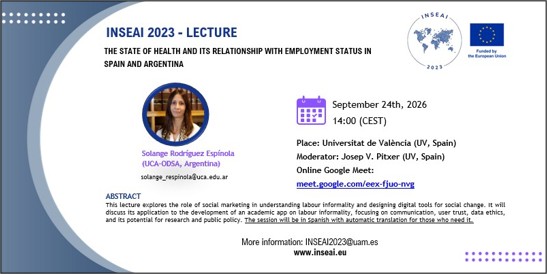
Solange Rodríguez Espínola (UCA-ODSA, Argentina) presented “The State of Health and its Relationship with Employment Status in Spain and Argentina” at the Universitat de València, 24 September 2026.
INSEAI and the School of Economics at the National University of Costa Rica (UNA) strengthened their collaboration in September, following a working meeting between Jorge Andrey Valenciano, Director of the School of Economics; Leonela Artavia, INSEAI team coordinator at UNA; and Santos M. Ruesga, INSEAI Project Coordinator.
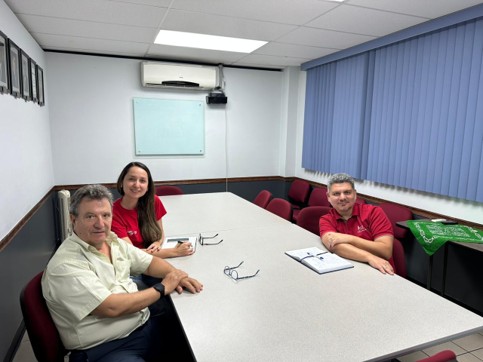
INSEAI–UNA working meeting in Costa Rica with Santos Miguel Ruesga, Leonela Artavia and Jorge Andrey Valenciano, strengthening cooperation and discussing future research activities within the network.
The meeting reviewed recent activities developed in Costa Rica including seminars, workshops, conferences and research secondments and explored future opportunities for joint research, academic mobility, training and knowledge transfer. The collaboration reinforces UNA’s role within the INSEAI network and contributes to strengthening academic exchange between Europe and Latin America.
These exchanges illustrate the role of mobility within INSEAI not only as a mechanism for individual research, but also as a means of connecting institutions, sharing perspectives and developing comparative approaches to informality across different socioeconomic contexts.
Discussion Series
September’s discussions placed particular emphasis on the changing nature of informality and its relationship with digitalisation, employment and well-being.
On 1 September, Santos M. Ruesga ( Universidad Autónoma de Madrid ), INSEAI Project Coordinator, delivered the teaching session “Digitalization and Hybrid Informality” at the National University of Costa Rica (UNA), introduced by Leonela Artavia Jiménez, INSEAI team coordinator at UNA. The session explored how digital transformation is reshaping the boundaries between formal and informal economic activity, with particular attention to digital labour platforms, fintech, artificial intelligence, e-government and digital identification systems. The concept of “hybrid informality” was discussed as a framework for understanding emerging forms of employment and self-employment in which greater digital visibility may coexist with gaps in labour rights and social protection.
On 24 September, Solange Rodríguez Espínola (UCA-ODSA, Argentina) presented “The State of Health and its Relationship with Employment Status in Spain and Argentina” at the Universitat de València, in a session moderated by Josep V. Pitxer (UV). The lecture introduced a comparative perspective on the relationship between employment status and health in the two countries.
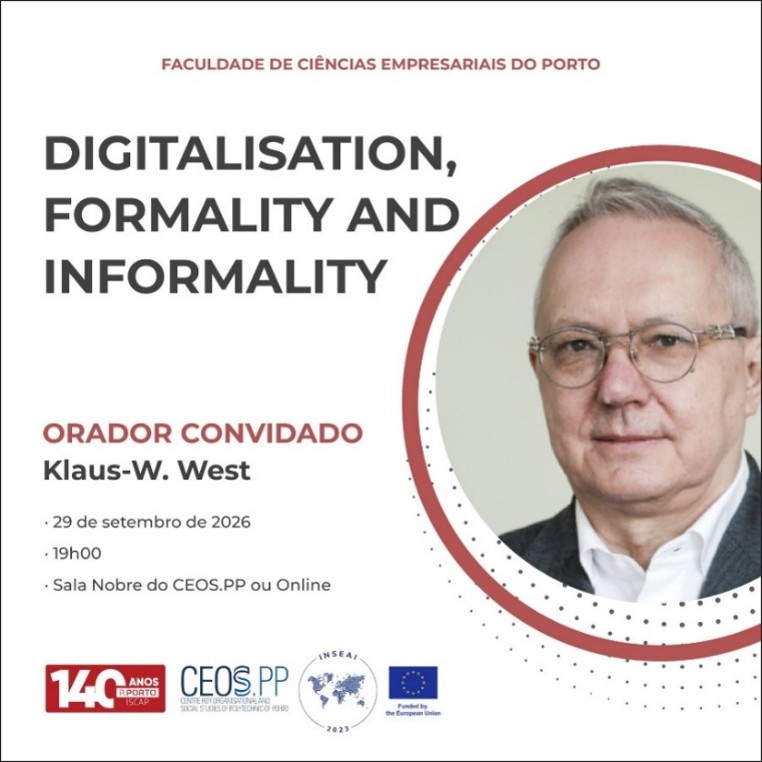
Klaus-W. West presented “Digitalisation, Formality and Informality” at the Polytechnic Institute of Porto, 29 September 2026.
On 29 September , Klaus-W. West (GEWAK, Germany) delivered “Digitalisation, Formality and Informality” at the Polytechnic Institute of Porto , with the possibility of online participation. The session examined the implications of digitalisation for contemporary forms of informality, paying particular attention to developments associated with digital culture and artificial intelligence and to the regulatory and ethical questions they raise.
Together, these discussions illustrate the breadth of the INSEAI research agenda, connecting labour-market transformations with their social, technological and institutional dimensions.
INSEAI: Blog & Testimonies
September and early October brought new contributions to INSEAI’s communication channels, combining research findings, expert testimonies, podcast conversations and contributions by network members to the wider public debate on changing forms of work and informality.
The INSEAI Blog featured “The Rising Trend of Psychological Distress in Argentina: Assessing Structural Determinants”, by María Agustina Paternó Manavella (ODSA-UCA).

Psychological distress in Argentina has increased significantly over the past fifteen years, with socioeconomic and labour vulnerability among its key structural determinants.
Drawing on data from the Argentine Social Debt Survey for 2010–2025, the study examines the evolution of psychological distress among Argentina’s urban adult population and its relationship with socioeconomic and labour conditions. Psychological distress increased from 18.4% in 2010 to 28.1% in 2024, with substantially greater vulnerability among people facing precarious economic and labour-market conditions. The findings highlight the close relationship between employment, structural precarity and subjective well-being.
The INSEAI Testimony Collection also continued with “Labor Informality in Mexico”, featuring Alfredo Hualde Alfaro (El Colegio de la Frontera Norte – COLEF, Mexico). His contribution brings the Mexican experience into the series and provides an expert perspective on labour informality and the transformations affecting employment in the country.
Digital platform work was also at the centre of Informal Talks #08, “Riders, Digital Platforms and Labour Informality in Argentina”. The episode features Gonzalo Ottaviano, Secretary of Labour Affairs at the Association of Motorcycle Messengers and Services Workers (ASiMM), in conversation with Diego Masello, member of the INSEAI network. Their discussion explores how digital platforms are transforming delivery work in Argentina, including their implications for working conditions, labour rights, worker representation and informality.
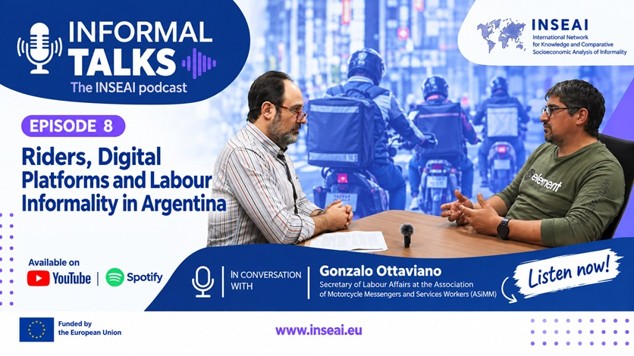
Informal Talks #08: Gonzalo Ottaviano in conversation with Diego Masello on riders, digital platforms and labour informality in Argentina.
INSEAI researchers also contributed to the wider public debate during the month. Alfredo Hualde Alfaro analysed the labour profiles of Uber drivers in Latin America, drawing on two IDB surveys to examine working hours, income dependence, previous employment and the diversity of situations behind platform work. His analysis also reflects on the regulatory challenge of reconciling flexibility with labour and social protection.
Meanwhile, Isabel Novo Corti (University of A Coruña, ECOBAS) addressed the changing organisation of work in “Un día de oficina al mes” , published in Mercados on 6 September. Drawing on recent evidence on hybrid work, the article discusses the effects of combining remote and face-to-face work on productivity, employee retention and workplace interaction, while considering the particular potential of telework in Galicia for territorial inclusion, access to employment and social capital.
Together, these contributions illustrate the diversity of INSEAI’s dissemination activities and extend the project’s discussion beyond labour informality itself, connecting it with digitalisation, platform work, socioeconomic vulnerability, mental health, new forms of work and subjective well-being .
Looking Ahead
The coming months will bring two important opportunities for the INSEAI network to meet and further develop its research agenda.

A Coruña will host the 3rd INSEAI Workshop on 26–27 November 2026, bringing the network together for two days of research exchange and discussion.
On 26–27 November 2026 , the 3rd INSEAI Workshop will take place at the Faculty of Economics and Business of the University of A Coruña , in hybrid format. Under the theme “Economic, Juridical and Political Frameworks and Cultural and Moral Beliefs. Informality and Socioeconomic Inequalities and Well-being” , the workshop will explore some of the less directly observable dimensions of informality and their relationship with socioeconomic inequalities and well-being.
This will be followed by the 4th INSEAI Workshop, “Informality, Mobility and Migration” , to be held in Porto on 30 November and 1 December . The workshop will provide a new forum for examining the connections between informality, migration and labour mobility from the comparative perspective that characterises the INSEAI project.
With both meetings taking place within a few days of each other, the end of November will provide an important opportunity for scientific exchange and face-to-face cooperation across the INSEAI network .
Secondment Chronicle
Vasile Alecsandru STRAT, professor from Bucharest University of Economic Studies, and member of the BEDSL team concluded a one-month secondment at Pontificia Universidad Catolica Argentina (UCA) as part of the INSEAI project, strengthening the network's international collaboration on comparative labor informality analysis.
During his stay, Vasile engaged with professors and researchers across the INSEAI network, exchanging ideas in a collaborative academic environment that built valuable international connections. Most relevant elements were his talk presenting a study on “European country level ESG”, generating enriching discussions and constructive feedback for the refinement of the work and a workshop presenting the “Ex-ante, monitoring and impact evaluations - examples from Romanian programs”, bringing some of the Romanian experience in from of members of ODSA
Secondment Impact
This experience enriches INSEAI's collective scientific output and exemplifies the Horizon Europe project's academic mobility model. Vasile expressed sincere gratitude to the UCA team, with a special mention for the ODSA team led by professor Ianina Tuñón for their warm welcome and rewarding professional exchange.
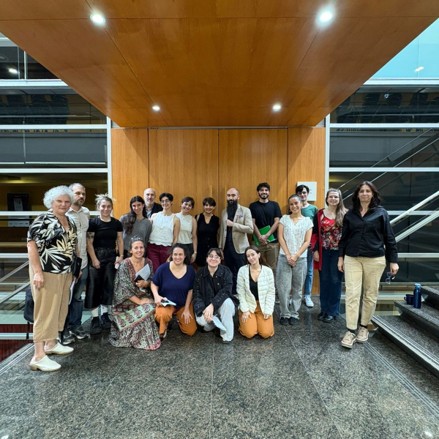
Vasile Alecsandru STRAT ( Bucharest University of Economic Studies, BEDSL team ) with colleagues at Pontificia Universidad Católica Argentina (UCA) during his one-month INSEAI secondment, strengthening academic exchange and international collaboration within the network.
Cultural Corner: Recommended Reading
This month’s Cultural Corner highlights the latest Economic Survey of Latin America and the Caribbean 2026 , published by the Economic Commission for Latin America and the Caribbean (ECLAC) . Its special focus, “Growth and Productivity in a Context of High Informality: Constraints and Challenges for Promoting Productive Formalization in the Region” , closely connects with the research agenda of INSEAI.
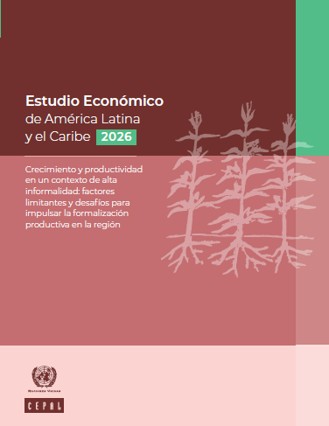
ECLAC’s Economic Survey of Latin America and the Caribbean 2026 , with a special focus on growth, productivity and the challenges of productive formalisation in a context of high informality.
The report approaches informality not only as a labour-market and social-protection issue, but also as a structural constraint on productivity, investment and sustained economic growth . It argues for productive formalisation strategies combining labour, fiscal, financial and productive-development policies, together with investment, technological transformation and stronger productive capacities.
A timely contribution to the wider debate on informality, formalisation and development in Latin America and the Caribbean .
Contact & Stay Connected
Website: www.inseai.eu
Email: info@inseai.es
LinkedIn: https://www.linkedin.com/in/inseai-project-471875371
Instagram: https://www.instagram.com/inseai.project/
Facebook: https://www.facebook.com/people/Inseai/61576239562950/
YouTube: https://www.youtube.com/@INSEAI-PROJECT
Spotify: https://open.spotify.com/
Calendar l Upcoming Events: https://www.inseai.eu/es/eventos
Newsletter: newsletter@inseai.eu
- Newsletter Team: Matías Membiela-Pollán (Coord.), Xose Picatoste-Novo, Sandrina Teixeira.

International Network for Knowledge and Comparative Socioeconomic Analysis of Informality and the Policies to be Implemented for their Formalization in the European Union and Latin America
Horizon Europe Project 101182756 — INSEAI 2023