
INSEAI Newsletter 2026/4 - April
Project & Network Highlights l April 2026
April marked a new step in the consolidation of the project’s second year, combining ongoing academic activity with a renewed focus on dissemination and visibility of research outputs.
A key development this month was the launch of the INSEAI Library , a new section on the project’s website designed to compile publications, books, chapters and audiovisual materials produced within the network. As highlighted in the recent Letter from the Coordinators, this initiative aims to strengthen the circulation of knowledge and encourage members to actively contribute by sharing their work and properly acknowledging project outputs.
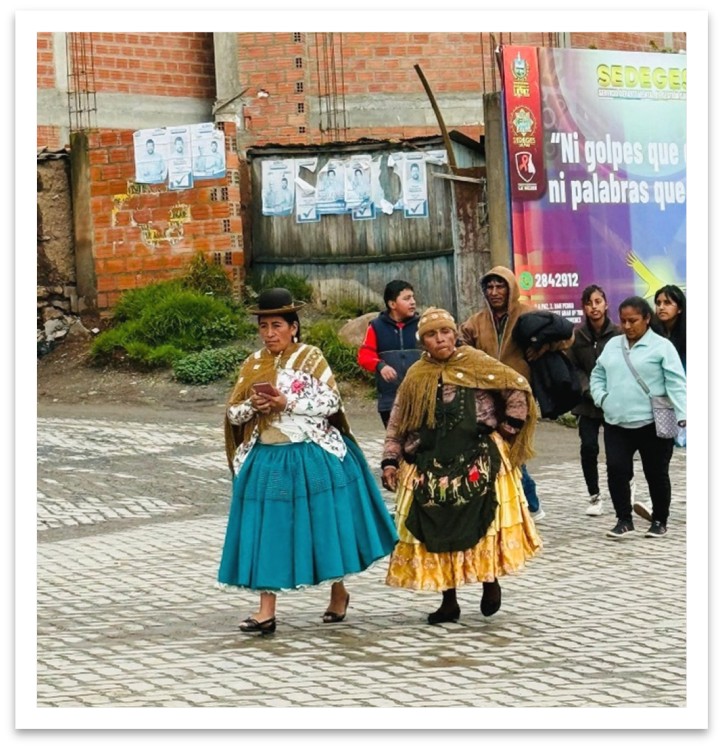
Everyday life in Bolivia: a glimpse into the social and cultural contexts that shape informal economic practices.
At the same time, the network continued to promote participation in the Employment and Informal Earnings Survey , encouraging members to expand its dissemination across partner countries, institutions and social networks as a key collective data effort.
Together, these actions reflect a growing emphasis on both producing and sharing knowledge, reinforcing the network’s role as a platform for comparative research on informality.
Network Cooperation: Learning and debating across universities
April maintained a steady rhythm of cooperation across institutions, with secondments continuing to drive academic exchange and collaborative work.
At ODSA–UCA (Argentina), visiting researchers Josep V. Pitxer and Empar Aguado ( Universitat de València ) contributed to ongoing discussions on informality, care work and labour regulation, fostering dialogue between European and Latin American perspectives.
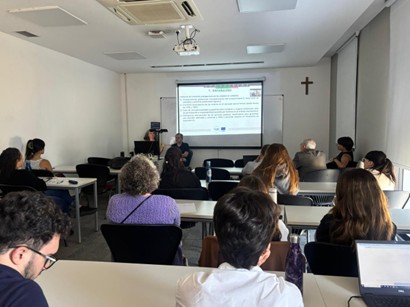
Josep V. Pitxer and Empar Aguado (Universitat de València) during an academic session as part of their research stay, sharing insights on informality and labour policies with researchers and students.
At the same time, collaboration extended to Brazil, where Monika Kulisz and Jolanta Słoniec ( Lublin University of Technology ), during their secondment at Universidade Federal Fluminense (UFF), advanced joint research lines and strengthened institutional ties through meetings with local researchers.
Academic exchange also extended to Mexico, where Raúl Lorente (Universitat de València), currently on secondment at the Instituto Belisario Domínguez, participated in a series of activities including a public discussion and an internal seminar with local researchers. These sessions fostered dialogue on labour informality and policy perspectives, further strengthening institutional collaboration in the Latin American context.
These exchanges continue to highlight how secondments function not only as research stays, but as spaces for sustained institutional cooperation, knowledge transfer and the development of shared analytical frameworks.
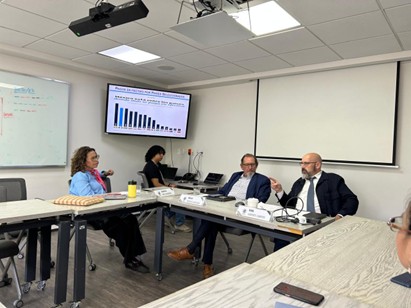
Raúl Lorente (Universitat de València) alongside Emilio Barriga during his stay at the Instituto Belisario Domínguez (Mexico), taking part in a discussion on labour and informality with researchers from the institute.
Discussion Series
April’s Discussion Series focused on recent empirical and comparative research, reinforcing the network’s multidisciplinary approach to labour informality.
A key session was delivered by Claudia Avossa ( University of Salerno ), currently on secondment at UAM, who analysed the relationship between informality and inequality of opportunity in Belgium, Italy and Spain using EU-SILC data. Adopting a fairness-based approach, the study showed that inequality of opportunity tends to be higher among informal workers, highlighting structural disadvantages linked to labour market segmentation in European contexts. The session formed part of the coordinated activities led by Julimar da Silva (UAM) within the INSEAI academic programme.
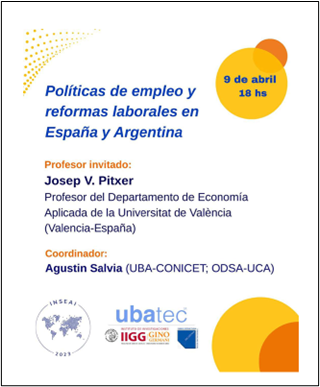
Poster of the lecture “Employment policies and labour reforms in Spain and Argentina” delivered by Josep V. Pitxer (Universitat de València), as part of his secondment at UCA, fostering comparative discussion on labour institutions.
In parallel, the Lecture Series gained particular relevance this month, with several sessions addressing informality from a gender and policy perspective. Josep V. Pitxer (Universitat de València), during his secondment at UCA (Argentina), examined recent employment policies and labour reforms in Spain and Argentina, offering a comparative institutional perspective, in collaboration with local coordination led by Agustín Salvia.
Two lectures by Fernanda Wanderley ( IISEC–UCB ), currently on secondment at UAM, focused on structural inequalities in Latin American labour markets. Her presentations explored the links between informality, gender and development, highlighting women’s concentration in low-productivity sectors, persistent wage gaps and the central role of care work in shaping labour participation. These sessions, organised in coordination with Santos Ruesga and Julimar da Silva (UAM), also emphasised the need for integrated policy approaches addressing both labour markets and the social organisation of care.
Academic exchange also extended to Mexico, where Raúl Lorente (Universitat de València), during his secondment, contributed to local debates through a series of activities, including the conversatorio “Hablemos de Crecimiento Económico y Empleo” held at the Universidad Autónoma de Tamaulipas . These sessions further reinforced dialogue on labour markets and informality in the Latin American context.
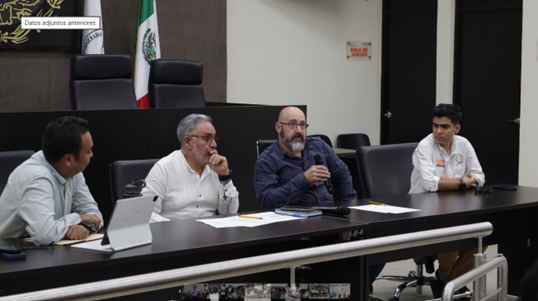
Raúl Lorente (Universitat de València) during a session at the Instituto Belisario Domínguez (Mexico), engaging in dialogue on economic growth, employment and labour informality with local researchers and practitioners.
Together, these activities reinforced the importance of combining comparative analysis, gender perspectives and policy-oriented research to better understand the structural dynamics of informality.
INSEAI: Blog & Testimonies
April continued to expand the network’s dissemination activities through both audiovisual and written formats.
A new episode of the INSEAI Testimony Collection was also released, featuring Leonela Artavia ( Universidad Nacional de Costa Rica ). In her contribution, she reflects on labour informality in Costa Rica, with particular attention to domestic work and the care economy, offering valuable insights into the challenges faced in these sectors.
In addition to previous contributions, a new post was published on the INSEAI Blog by Shirley Benavides Vindas (Universidad Nacional, Costa Rica), titled “ Labor Informality in Economic Thought .” The piece revisits how economic theory has approached informality over time, from classical interpretations to more recent structural perspectives, offering a broader analytical lens to understand its persistence and transformation.
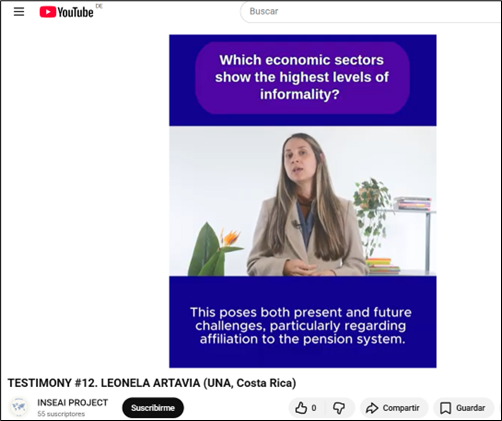
Leonela Artavia (Universidad Nacional de Costa Rica) in the latest episode of the INSEAI Testimony Collection, sharing her perspective on labour informality and its implications in key sectors such as domestic work and the care economy.
Together, these contributions continue to strengthen the project’s commitment to connecting academic research with wider audiences through accessible and diverse formats.
Looking Ahead: Academic Networks and Conferences
Looking ahead, the network continues to consolidate its second-year activities while expanding its academic outreach.
Building on the momentum of recent months, efforts will focus on strengthening ongoing research, enhancing comparative outputs and aligning secondments with project priorities.
Following the closure of the call for papers, the Second INSEAI Workshop (University of Salerno) will soon move into its next phase, with programme details and selected contributions to be announced.
At the same time, seminars, lectures and collaborative activities will continue to sustain the network’s dynamic exchange across institutions.
Secondment Chronicle
I. Our Story in Bolivia: A Country That Stayed Under Our Skin, by Anabela Mesquita, María Isabel Vieira, Sandrina Teixeira y María João Castro (ISCAP – Porto ).
(Extended reduced version)
This secondment unfolded as much more than an academic experience. What initially appeared as a conventional research stay—focused on seminars, meetings and collaborative work—quickly evolved into a much richer and more immersive process, combining academic exchange with direct exposure to everyday realities.
The academic dimension was intense and enriching. During our time in Bolivia, we participated in seminars, webinars and research discussions, sharing our work while engaging with local perspectives. The support received at the Bolivian Catholic University was fundamental, both in facilitating fieldwork and in creating an environment of genuine intellectual exchange.
However, it was beyond formal academic spaces where much of the learning took place. Fieldwork, interviews and informal conversations revealed the complex ways in which labour informality is embedded in daily life. Many of the people we spoke with approached the interviews with initial hesitation, yet quickly opened up, sharing their experiences with generosity and curiosity. These encounters transformed data collection into meaningful human exchanges.
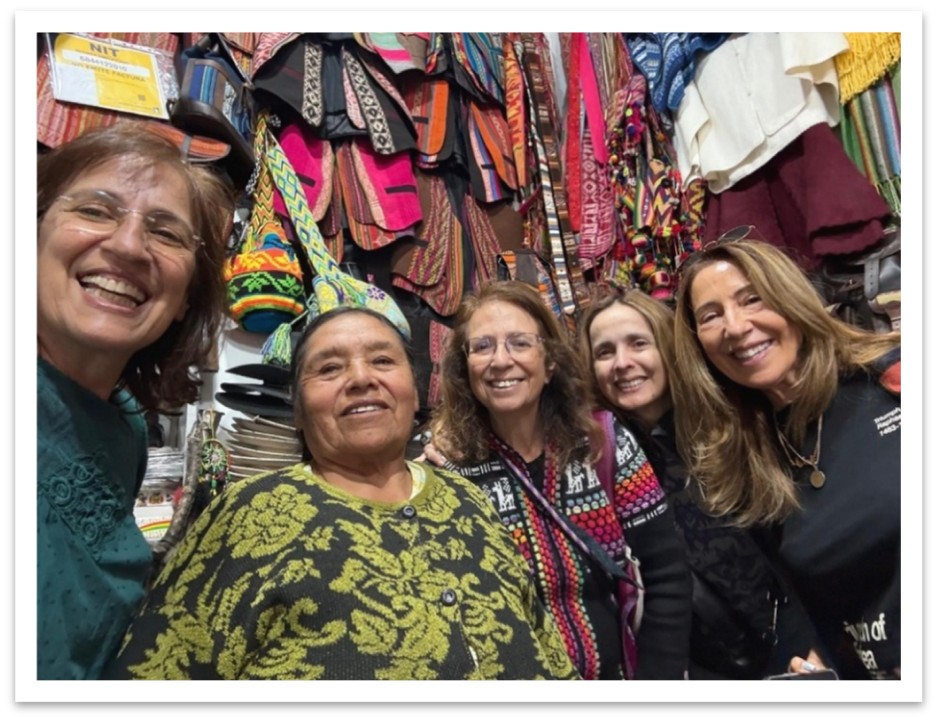
María Isabel Vieira, Anabela Mesquita, Sandrina Teixeira y María João Castro during their secondment in Bolivia, sharing moments where academic work intertwined with local everyday life and cultural exchange.
At the same time, everyday life became an essential part of the experience. Small routines—visiting local shops, interacting with neighbours, navigating the city—gradually created a sense of familiarity. These moments, often overlooked in academic analysis, provided valuable insights into how informality is lived, negotiated and normalised in daily contexts.
The physical and geographical environment also shaped the experience in unexpected ways. The high altitude demanded constant adaptation, slowing down our pace and making even simple activities more demanding. This condition, combined with the country’s striking landscapes—mountains, valleys and constantly shifting skies—created a setting that was both challenging and deeply memorable.
Bolivia revealed itself as a place of contrasts. Poverty and inequality were clearly visible, yet they coexisted with strong forms of social cohesion, everyday solidarity and a remarkable openness towards others. Rather than encountering hostility, we experienced a sense of calm resilience—a way of moving forward despite structural difficulties.
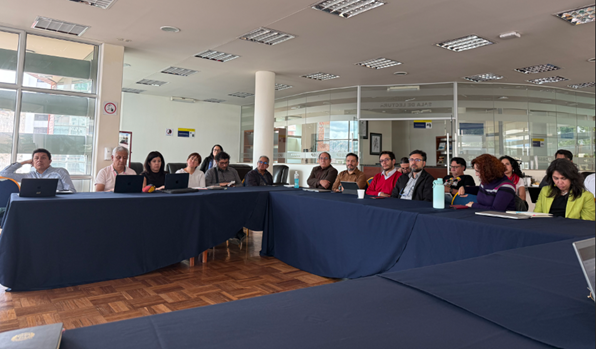
One of the webinars held in Bolivia during the secondment, bringing together researchers and participants for discussion and knowledge exchange on labour informality.
The comparative dimension of the secondment was equally significant. Dialogues between European and Latin American perspectives highlighted both shared structural challenges—such as labour fragmentation, instability and limited access to social protection—and important contextual differences shaped by institutional frameworks and development trajectories.
Ultimately, this experience reinforced a key insight: informality cannot be fully understood through data or theory alone. It requires engaging with local contexts, listening to lived experiences and recognising the social relations that sustain economic practices. In this sense, secondments are not only a tool for academic collaboration, but also a space for rethinking how we approach and understand informality in all its complexity.
II. Development, Poverty and Informality: Key Insights from the INSEAI Lecture at UAM
On April 22, 2026, Prof. Fernanda Wanderley from IISEC-UCB (Universidad Católica Boliviana) delivered a masterclass in the Master's program at Universidad Autónoma de Madrid titled "Development, Informality and Gender: The Latin American Labour Market under Debate". The lecture, simultaneously broadcast via Google Meet to the INSEAI network, brought together students, researchers, and international collaborators, enriching academic dialogue on structural inequalities in Latin America.
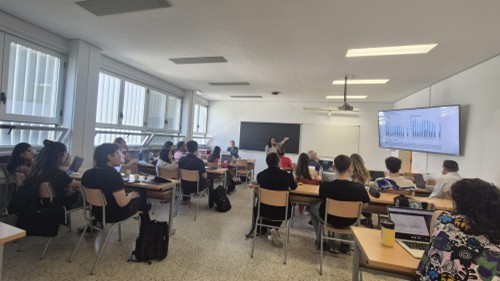
Prof. Fernanda Wanderley (IISEC–UCB) delivering a masterclass at Universidad Autónoma de Madrid, addressing the links between informality, gender and development in Latin America, and fostering debate among students and researchers across the network.
The presentation addressed three fundamental axes: first, the multidimensional analysis of monetary poverty and its links to labor income; second, the labor market's key role as determinant, where employment and pensions explain 29.1% of multidimensional poverty (42.5% in women); and third, gender inequalities evidenced in participation gaps, occupational segregation, and time poverty from double workloads. Wanderley highlighted regional informality (46.7% of employment) and proposed comprehensive policies with a 5R approach (recognize, reduce, redistribute, reward, represent).
This session holds special relevance for INSEAI, whose focus is the comparative analysis of socioeconomic informality between Europe and Latin America. By highlighting how the sexual division of labor and informality perpetuate feminized poverty, it strengthens the project's agenda for inclusive policies.
Cultural Corner: Recommended Reading
The Mushroom at the End of the World . (Anna Lowenhaupt Tsing. Princeton University Press, 2015).
This ethnographic work follows the global trade of matsutake mushrooms, tracing how people build livelihoods in contexts of uncertainty, instability and fragmented economies. Rather than focusing directly on labour informality, the book offers a broader reflection on how economic life unfolds beyond stable, formal structures.
Through interconnected stories—from forest pickers to international traders—it explores survival, cooperation and adaptation in what the author describes as the “ruins of capitalism”. The book highlights how diverse actors, often operating at the margins of formal systems, create value and sustain livelihoods through flexible and sometimes fragile networks.
A compelling read that invites us to rethink work, value and economic organisation in contemporary societies, while offering a more human and grounded perspective on economic life beyond conventional frameworks.
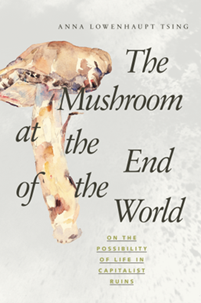
A different lens on work and survival: The Mushroom at the End of the World explores how livelihoods emerge beyond formal economic structures.
Contact & Stay Connected
Website: www.inseai.eu
Email: newsletter@inseai.eu
LinkedIn: https://www.linkedin.com/in/inseai-project-471875371
Instagram: https://www.instagram.com/inseai.project/
Facebook: https://www.facebook.com/people/Inseai/61576239562950/
YouTube: https://www.youtube.com/@INSEAI-PROJECT
Spotify: https://open.spotify.com/
Calendar l Upcoming Events: https://www.inseai.eu/es/eventos
Newsletter: newsletter@inseai.eu
- Newsletter Team: Matías Membiela-Pollán (Coord.), Xose Picatoste-Novo, Sandrina Teixeira.

International Network for Knowledge and Comparative Socioeconomic Analysis of Informality and the Policies to be Implemented for their Formalization in the European Union and Latin America
Horizon Europe Project 101182756 — INSEAI 2023