
INSEAI Newsletter 2025/4 - November
Project & Network Highlights l November 2025
November was a particularly active month for the INSEAI network. Research stays, seminars, hybrid events and discussions took place across several countries, alongside an important milestone for the project: the First INSEAI Workshop, hosted in Niterói, Brazil.
At the same time, fieldwork for the INSEAI Survey progressed, new testimonies were released, and the network continued strengthening collaboration between European and Latin American teams.
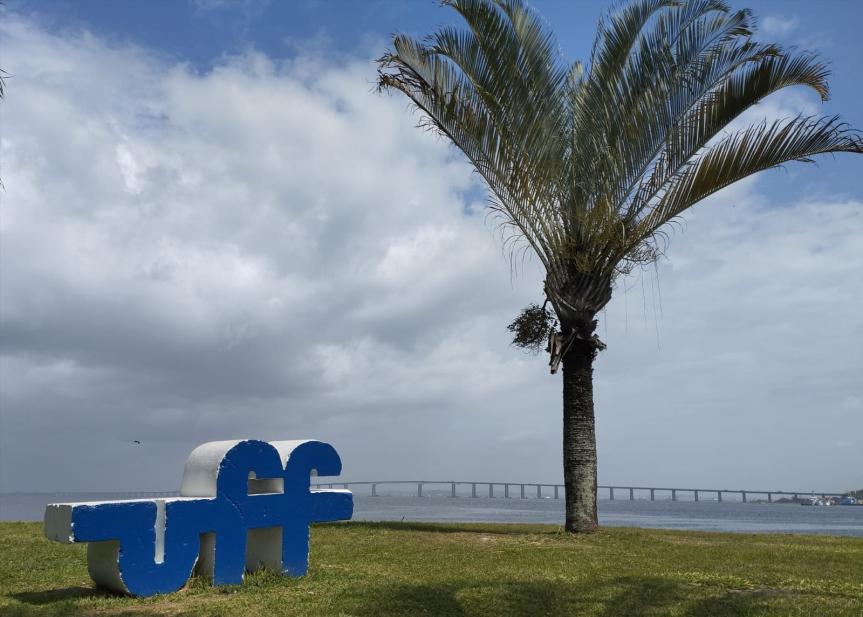
Campus of the Universidade Federal Fluminense (UFF), host of the First INSEAI Workshop, with the Rio-Niterói bridge in the background.
Network Cooperation: Learning and debating across universities
The First INSEAI Workshop was held on 20-21 November at the Universidade Federal Fluminense. Under the title "Theoretical Context on Informal Activity: Conceptual Frameworks, Informality and Sustainable Growth Models", the event brought together researchers presenting macroeconomic, microeconomic and interdisciplinary approaches to informality.
The programme included two keynote lectures:
- François Roubaud, offering an overview of research developments on informality since the 1970s.
- João Hallak, examining the structural and cyclical dimensions of informal labour in Brazil.
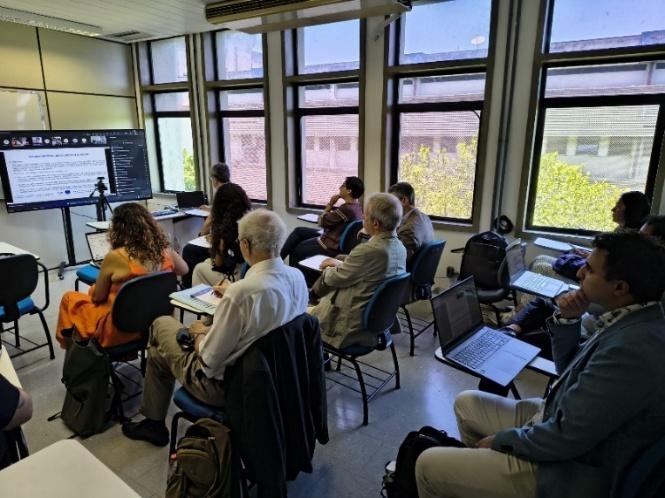
Participants attending the I INSEAI Workshop session held at UFRJ are combining on-site and online contributions.
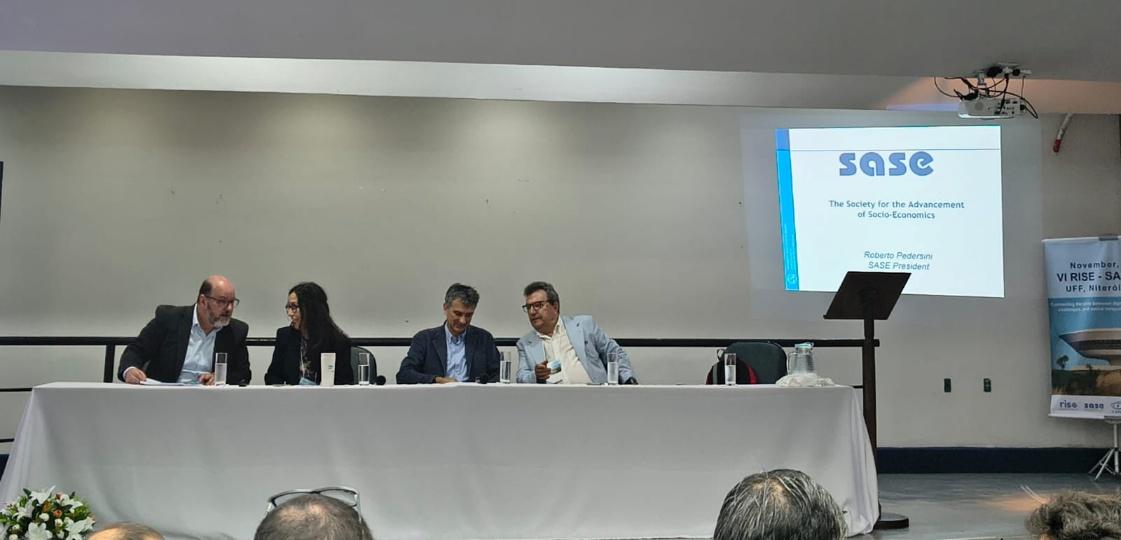
Opening panel of the VI RISE-SASE Meeting at UFF. From Left to right, Marco Antonio Vargas, Dean of the Economics Faculty of UFF, Ana Urraca, Coordinator of VI RISE, Roberto Pedersini, President of SASE and Santos M. Ruesga, Coordinator of INSEAI. Network.
This workshop marks the beginning of a yearly series of INSEAI scientific meetings, with the next edition to be hosted by the University of Salerno in 2026.
November also saw a full week of activities in Buenos Aires, where Santos Ruesga and José Luis Carreras participated in interviews, seminars and academic discussions at UCA and UBA. These sessions focused on labour reforms in Spain and Argentina, and on the links between informality and social policy.
In Tijuana, El Colegio de la Frontera Norte organised the seminar "Informality after Globalisation: a Multidisciplinary Perspective", bringing together researchers from the network and external experts.
Meanwhile, in Poland, Dr Marcin Gąsior presented at the CMES conference on the use of machine learning techniques to study attitudes toward informal employment.
Discussion Series
The INSEAI Discussion Series remained active throughout the month:
INSEAI Discussion UFRJ-BUES (26 November). The team from the Bucharest University of Economic Studies presented work showing how informality affects regional performance and can shift European regional rankings once included in composite indicators. Their analysis combines shadow economy adjustments, machine learning methods and ESG governance perspectives.
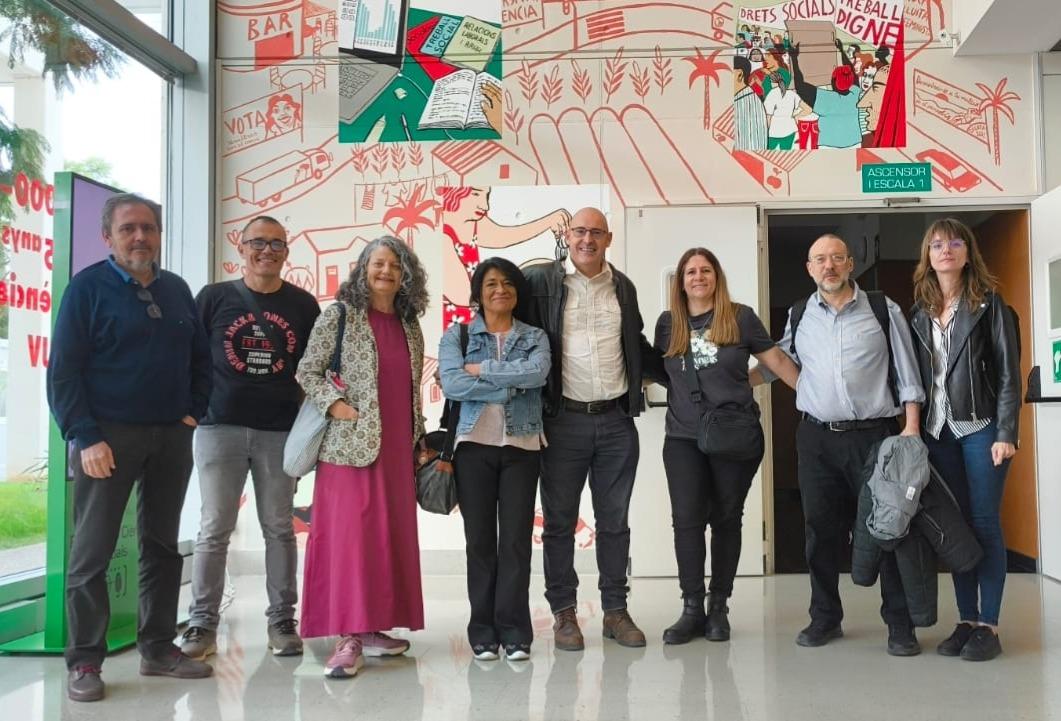
Participants of the INSEAI seminar at the Universitat de València, held as part of the network's ongoing academic collaboration.
INSEAI Testimony Collection
The INSEAI Testimony Collection expanded this month with two new contributions:
- Laura Golovanevsky (CONICET-UJUJUY, Argentina)
- Luis Ortiz (UNA, Paraguay)
- Fernanda Wanderley (IISEC-UCB, Bolivia)
These testimonies offer insight into national contexts and the structural factors that influence informality in each region.
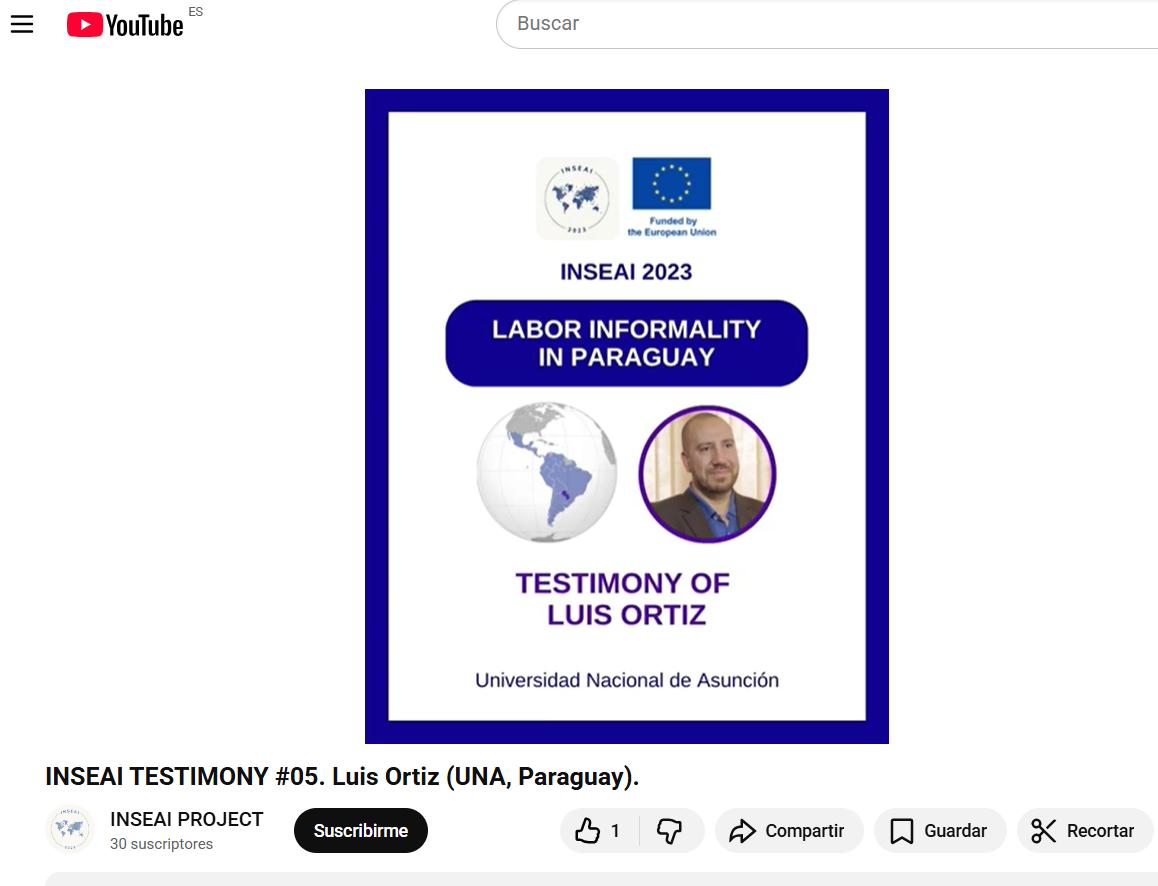
INSEAI Testimony #05 featuring Luis Ortiz (UNA, Paraguay) on labor informality in Paraguay.
A new entry was also published on the INSEAI Blog, authored by Gabriel López and Javier Ortega (University of Alicante). They describe their research experience in Porto, reflecting on urban dynamics and informal activities associated with tourism.
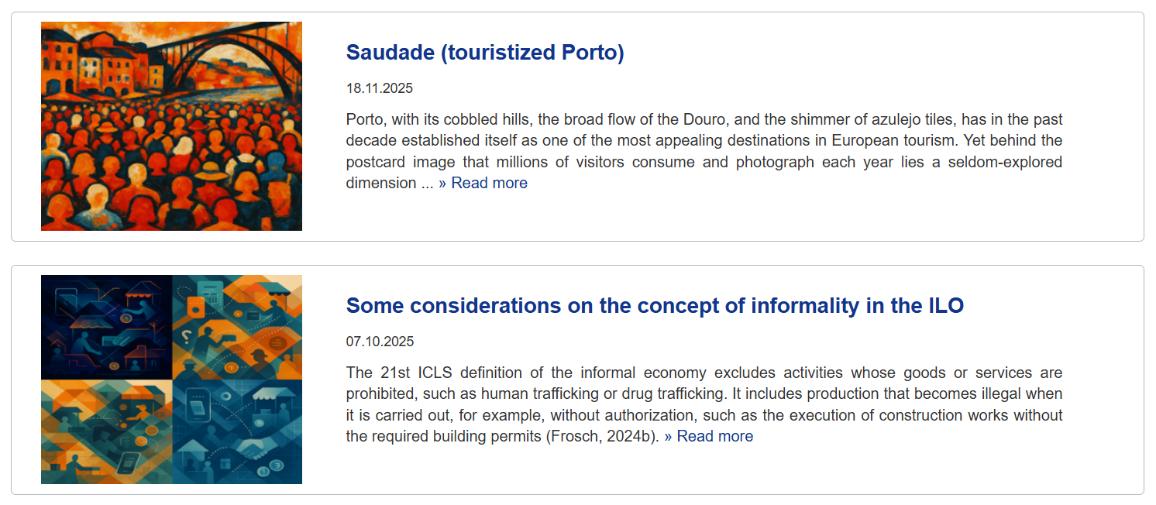
Recent contributions to the INSEAI Blog include reflections on touristification in Porto and new perspectives on informality.
Cultural Corner: Recommended Reading
Expanding Social Protection and Addressing Informality in Latin America
(OECD, 2025).
This recent OECD report offers an up-to-date overview of the persistent role of informality in Latin American labour markets and examines policy strategies aimed at improving social protection and promoting formalisation. It provides comparative data, country cases and actionable recommendations-an accessible resource for readers interested in labour markets, inequality and policy design.
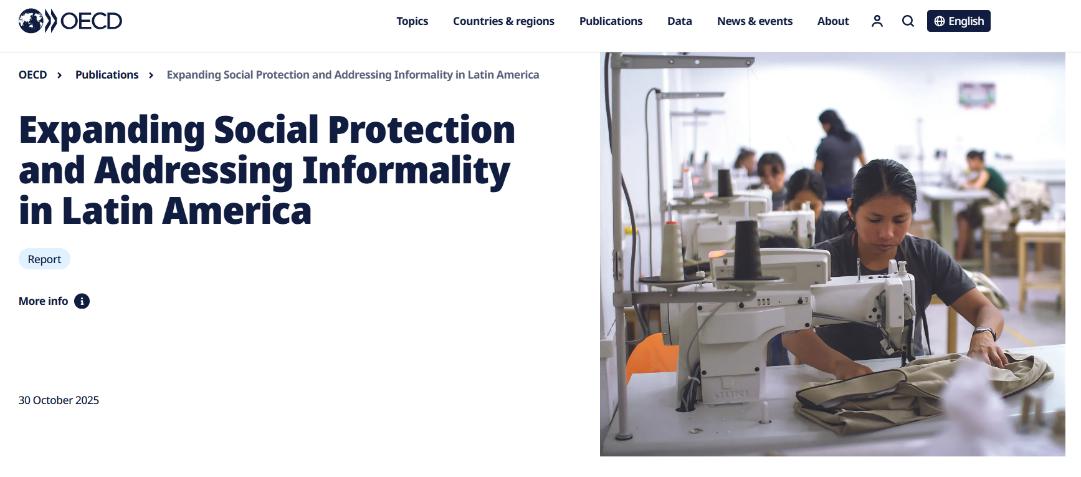
OECD report on social protection and informality in Latin America, published October 2025.
Contact & Stay Connected
Website: www.inseai.eu
Email: newsletter@inseai.eu
LinkedIn: https://www.linkedin.com/company/inseai/
Facebook: https://www.facebook.com/share/19ZjtrRpHY/
Instagram: https://www.instagram.com/inseai.project
YouTube: https://www.youtube.com/@INSEAI-PROJECT
Calendar l Upcoming Events: https://www.inseai.eu/es/eventos
- Newsletter Team: Matías Membiela-Pollán (Coord.), Xose Picatoste-Novo, Sandrina Teixeira.

International Network for Knowledge and Comparative Socioeconomic Analysis of Informality and the Policies to be Implemented for their Formalization in the European Union and Latin America
Horizon Europe Project 101182756 — INSEAI 2023