
INSEAI Newsletter 2026/6 - June
Project & Network Highlights l June 2026
June marked another dynamic month for the INSEAI network , characterised by intense international collaboration, active research secondments and a broad programme of academic activities across Europe and Latin America. Researchers from partner institutions continued to strengthen the project's comparative perspective on labour informality through seminars, institutional meetings and joint research initiatives.
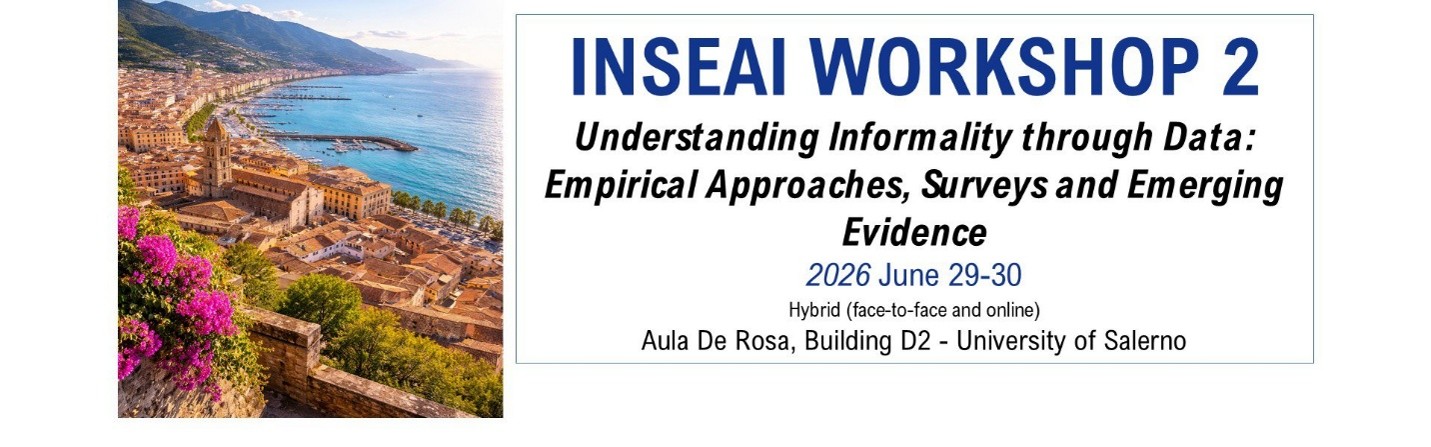
Preparations for the Second INSEAI Workshop, bringing together researchers from across Europe and Latin America to advance comparative research on labour informality.
The month was particularly significant for consolidating cooperation between partner universities. Research stays promoted new opportunities for scientific exchange, while several academic events reinforced dialogue on labour markets, social policies and the socioeconomic dimensions of informality. At the same time, coordination efforts continued in preparation for upcoming project activities, reflecting the growing maturity of the INSEAI network and its commitment to interdisciplinary and international collaboration.
June also saw continued dissemination of project outcomes through new audiovisual resources and online publications, further expanding the visibility of the network and fostering knowledge exchange among researchers, practitioners and the wider public.
Network Cooperation: Learning and debating across universities
International cooperation continued to expand throughout June, with several secondments and institutional meetings reinforcing collaboration among INSEAI partners. A major milestone was the research stay undertaken by Isabel Novo-Corti, Francisco Rey Vozoso and Matías Membiela-Pollán (Universidade da Coruña) at ISCAP – Polytechnic Institute of Porto , where joint work focused on the conceptual development of the INSEAI mobile application, the integration of social marketing into strategies for labour formalisation, and the preparation of upcoming project activities.
Cooperation also advanced through a coordination meeting involving representatives from the Universidad Autónoma de Madrid (UAM) , Universitat de València (UV) , University of Buenos Aires (UBA) , Pontifical Catholic University of Argentina (UCA) and University of Alicante (UA) . Led by Santos Ruesga , INSEAI Project Coordinator, the meeting reviewed progress on collaborative research related to digitalisation and labour informality, while defining priorities for the following stages of the project.
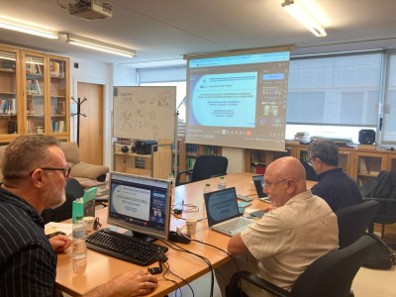
Representatives from UAM, Universitat de València, UBA, UCA and the University of Alicante during the online coordination meeting led by Santos Ruesga, reviewing progress on collaborative research on digitalisation and labour informality.
The international exchange of knowledge was further strengthened through secondments hosted in Mexico and Poland , where INSEAI researchers continued developing academic collaborations with local institutions, promoting comparative research and fostering new opportunities for future joint initiatives across the network.
Preparations also concluded for the Second INSEAI Workshop , held at the University of Salerno on 29–30 June under the theme Understanding Informality through Data: Empirical Approaches, Surveys and Emerging Evidence . The event brought together researchers from Europe and Latin America, featuring keynote lectures by Michael Thye Frosch (ILO) , Friedrich Schneider and Agustín Salvia , alongside a comprehensive programme of parallel sessions covering new empirical evidence and methodological approaches to labour informality.
Discussion Series
June's academic programme continued to promote interdisciplinary dialogue on labour informality through discussions and lectures held across several partner institutions.
A discussion organised during the research secondment of the Universidade da Coruña at ISCAP – Polytechnic Institute of Porto explored the contribution of social marketing to the development of digital tools for labour formalisation. Entitled "From Social Marketing to the APP: Informal Employment, Decision-Making and Social Change" , the session examined how communication strategies, user trust, data ethics and behavioural approaches can support the design of the INSEAI mobile application. The activity was coordinated by Anabela Mesquita and Sandrina Teixeira .
The programme also included a lecture by Raúl Lorente and Verónica Ramírez ( Universitat de València ), currently on secondment at the Instituto Belisario Domínguez (Mexico). Their presentation analysed informal employment in Mexico through the labour trajectories of workers in street food establishments, combining official labour-market statistics with ongoing qualitative research on workers' experiences. The activity was coordinated by Jesúswaldo Martínez Soria .
International academic exchange also extended to Poland , where Luis Ortiz (Universidad Nacional de Asunción), during his research stay at Lublin University of Technology , delivered a seminar that further strengthened collaboration between European and Latin American researchers working on labour informality and public policy.
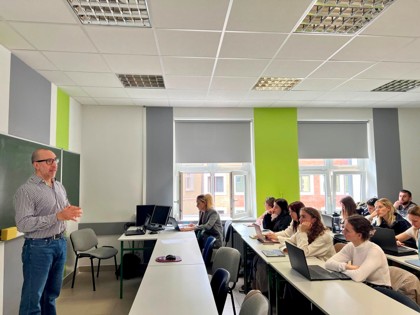
Luis Ortiz ( National University of Asunción , Paraguay) delivering his seminar at Lublin University of Technology (Poland) during his INSEAI research stay, fostering academic exchange on labour informality and public policy
INSEAI: Blog & Testimonies
June also brought new dissemination activities that continued to expand the visibility of the INSEAI network and its research on labour informality.
A new episode of the INSEAI Testimony Collection featured Jolanta Słoniec (Lublin University of Technology, Poland), who shared her perspective on labour informality from the standpoint of management, organisational studies and institutional development. Drawing on her extensive academic experience, the interview highlighted the value of international and comparative approaches for understanding informal employment across different socioeconomic contexts.
The latest episode of Informal Talks welcomed Matthias Schulze-Böing (GEWAK, Germany) and Anna Weirich (Faire Mobilität, Germany) , who discussed the relationship between labour informality and migrant workers in the German transport sector. Their conversation explored the vulnerabilities associated with labour mobility, cross-border employment and the protection of migrant workers, illustrating how informality can emerge even within highly regulated labour markets.
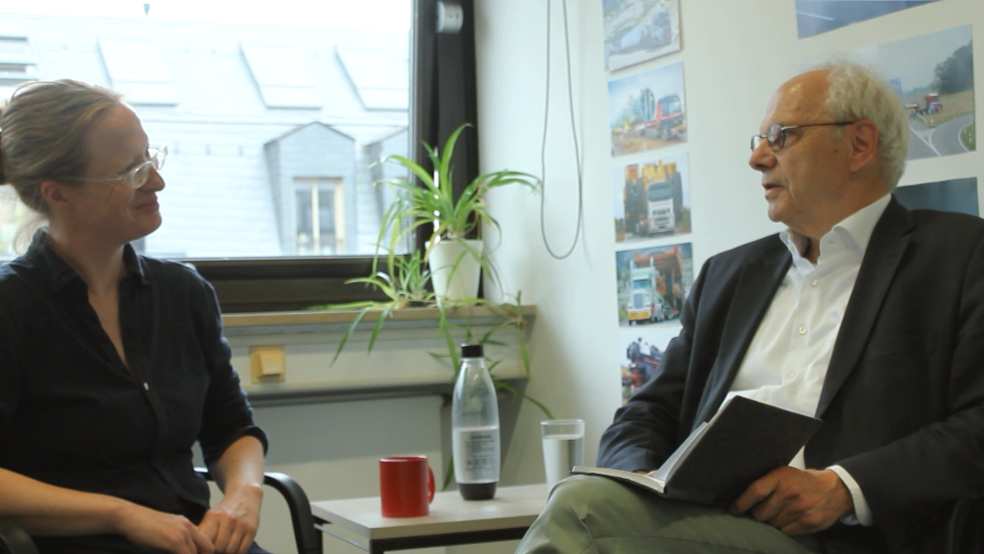
Matthias Schulze-Böing (GEWAK, Germany) and Anna Weirich ( Faire Mobilität , Germany) during the latest episode of Informal Talks , discussing labour informality and migrant workers in Germany's transport sector.
Preparations also continued for the Second INSEAI Workshop , held at the University of Salerno on 29–30 June. The programme, made available to all network members during the month, reflected the growing maturity of the project and brought together researchers from across Europe and Latin America to discuss new empirical evidence and policy perspectives on labour informality.
The INSEAI Blog also featured the post “The Shared Mechanisms of Youth Labour-Market Insertion: A Comparative Study of Argentina, Germany, Italy, Spain and Poland” . Drawing on comparative evidence from harmonised household surveys, the article examines how young people enter increasingly segmented labour markets across different institutional contexts. While employment instability takes different forms—structural informality in Argentina and non-standard employment in Europe—the analysis identifies common mechanisms shaping labour-market vulnerability, highlighting the roles of education, gender, family formation and productive structures in reproducing inequalities during the transition to adulthood.
Secondment Chronicle
From Social Marketing to Digital Innovation: Advancing the INSEAI App in Porto
During June, researchers from Universidade da Coruña carried out a research secondment at ISCAP – Polytechnic Institute of Porto , contributing to one of the most innovative strands of the INSEAI project: the conceptual development of a digital application designed to analyse labour informality and support formalisation processes.
The stay combined research, teaching and networking activities. A central milestone was the seminar "From Social Marketing to the APP: Informal Employment, Decision-Making and Social Change" , where we presented how social marketing can contribute to the design of digital tools capable of encouraging behavioural change. The discussion explored how communication strategies, trust, incentives and ethical data management can enhance users' understanding of the costs and benefits associated with labour formalisation.
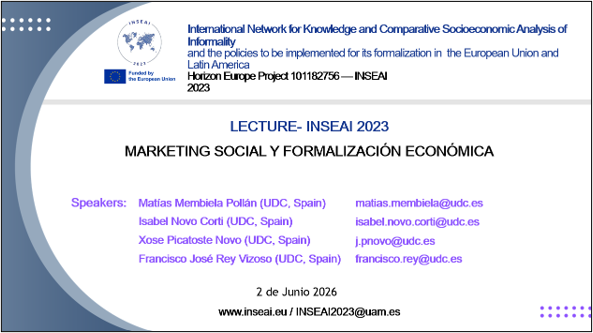
Poster of the INSEAI lecture Social Marketing and Economic Formalisation , delivered during the research secondment at ISCAP – Polytechnic Institute of Porto.
Throughout the secondment, collaborative work also focused on strengthening the theoretical framework that underpins the application's algorithms. Particular attention was devoted to integrating concepts from social marketing, social capital and behavioural economics into a multidisciplinary approach capable of supporting both academic research and evidence-based public policy.
Beyond the research activities, the stay offered valuable opportunities to reinforce cooperation between the Universidade da Coruña and ISCAP. Meetings with researchers, seminars with postgraduate students and informal exchanges contributed to identifying new lines of collaboration while further consolidating the international dimension of the INSEAI network.
Cultural Corner: Recommended Reading
This secondment illustrates how mobility within the network extends beyond knowledge exchange, fostering the co-creation of innovative tools and strengthening long-term scientific collaboration between partner institutions.
Nudge: The Final Edition . Richard H. Thaler & Cass R. Sunstein (Penguin Books, 2021).

Thaler and Sunstein’s Nudge: The Final Edition (2021), a landmark book on behavioural economics and decision-making.
How can public policies encourage better decisions without restricting individual freedom? In Nudge , Nobel Prize winner Richard Thaler and legal scholar Cass Sunstein introduce the concept of choice architecture , showing how small changes in the way choices are presented can influence behaviour in areas such as health, finance, education and public policy.
Contact & Stay Connected
The updated edition incorporates new evidence on behavioural economics and digital environments, making it particularly relevant for current debates on labour-market participation, public trust and policy design. For researchers interested in labour informality, the book offers valuable insights into how behavioural approaches can complement traditional regulatory strategies and support more effective pathways towards formalisation.
Website: www.inseai.eu
Email: newsletter@inseai.eu
LinkedIn: https://www.linkedin.com/in/inseai-project-471875371
Instagram: https://www.instagram.com/inseai.project/
Facebook: https://www.facebook.com/people/Inseai/61576239562950/
YouTube: https://www.youtube.com/@INSEAI-PROJECT
Spotify: https://open.spotify.com/
Calendar l Upcoming Events: https://www.inseai.eu/es/eventos
Newsletter: newsletter@inseai.eu
- Newsletter Team: Matías Membiela-Pollán (Coord.), Xose Picatoste-Novo, Sandrina Teixeira.

International Network for Knowledge and Comparative Socioeconomic Analysis of Informality and the Policies to be Implemented for their Formalization in the European Union and Latin America
Horizon Europe Project 101182756 — INSEAI 2023