
INSEAI Newsletter 2026/3 - March
Project & Network Highlights l March 2026
March marked a key moment for the consolidation of the project’s second year, combining intense academic activity with an important milestone in coordination: the Mid-Term Meeting , held on 11 March in hybrid format (Madrid/online).
The meeting reviewed the progress of activities across work packages, secondments and dissemination, while identifying challenges and priorities for the coming months. A dedicated session between seconded researchers and the EU officer further highlighted the central role of mobility experiences within the project.
At the same time, the network continued to promote participation in the Employment and Informal Earnings Survey , encouraging members to expand its dissemination across partner countries and social networks.
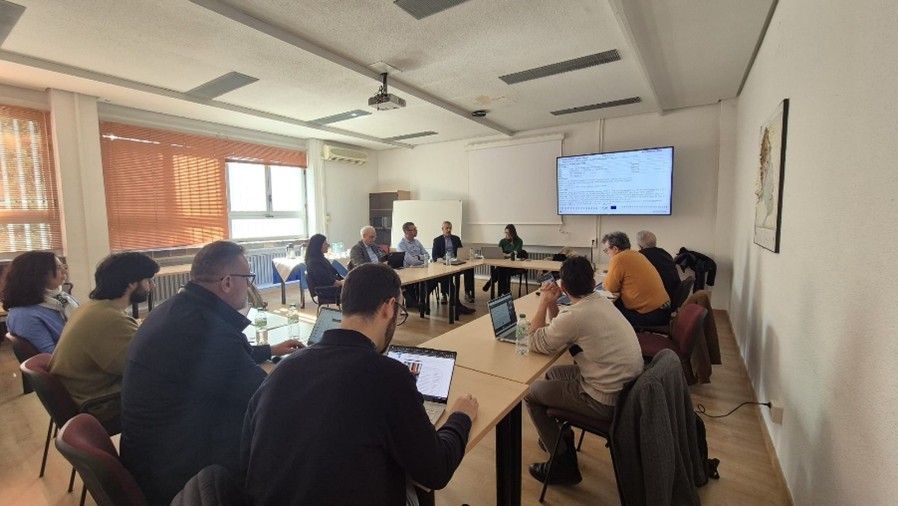
Mid-Term Meeting held in March, bringing together project members to review progress, address challenges and define priorities for the next phase of activities.
Network Cooperation: Learning and debating across universities
March saw continued strengthening of cooperation across institutions through secondments and joint academic activities.
At ODSA–UCA (Argentina) , Josep V. Pitxer and Empar Aguado (Universitat de València) led a discussion during their research stay, addressing structural barriers and resistance to the formalisation of domestic and care work in Spain, opening a comparative dialogue with Latin American contexts.
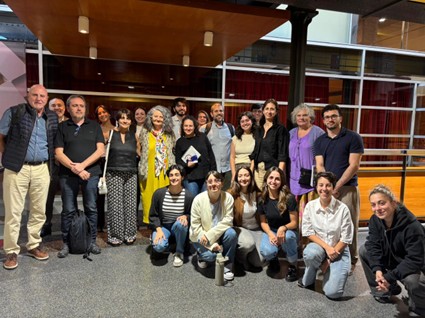
Josep V. Pitxer and Empar Aguado (Universitat de València) with colleagues at ODSA–UCA during their research stay, following a discussion on informality, care work and barriers to formalisation in Spain.
Collaboration also extended to Brazil, where Monika Kulisz and Jolanta SÅ‚oniec (Lublin University of Technology) held meetings with researchers at Universidade Federal Fluminense (UFF) , advancing joint research lines on informality and social attitudes.
These exchanges reinforce the role of secondments as a key mechanism for comparative research, institutional cooperation and knowledge transfer across regions.
Discussion Series
March’s Discussion Series was particularly dynamic, reflecting the diversity of approaches within the network and the centrality of secondments in shaping academic exchange.
The month opened with a session by Florencia Nieva ( Universidad Nacional de Jujuy ), who explored popular economies in northern Argentina through an anthropological and feminist lens, highlighting the articulation between informality, social reproduction and cultural dynamics.
This was followed by Marta Cebollada ( UAM ), who examined recent reforms in paid domestic work in Mexico, showing limited progress in formalisation despite regulatory changes and persistent gender inequalities in this highly feminised sector.
Comparative and micro-level perspectives were also addressed by Monika Kulisz and Jolanta SÅ‚oniec ( Lublin University of Technology ), who analysed behavioural drivers of informal employment in Poland, demonstrating how economic rationality, social norms and moral attitudes interact in shaping participation in informal work.
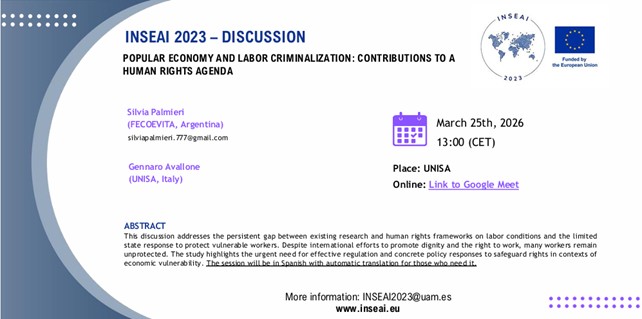
Discussion led by Silvia Palmieri (FECOEVITA) and Gennaro Avallone (UNISA) on the criminalisation of labour in popular economies, highlighting the gap between human rights frameworks and the limited protection available to vulnerable workers.
Later in the month, Silvia Palmieri (FECOEVITA) and Gennaro Avallone ( University of Salerno ) led a discussion on popular economy and labour criminalisation, highlighting the gap between human rights frameworks and the limited capacity of public policies to protect vulnerable workers.
Together, these sessions illustrate how informality continues to be approached as a multidimensional phenomenon, linking economic structures, social norms, gender dynamics and institutional responses.
INSEAI: Blog & Testimonies
March continued to expand the project’s dissemination activities through audiovisual and accessible formats.
A new episode of INFORMAL TALKS (#05) featured Guillermina Comas and Juan Ignacio Bonfiglio (University of Buenos Aires), who discussed the relationship between labour informality and poverty in Argentina. The episode raises a key question: to what extent do recent macroeconomic improvements translate into better living conditions for households?
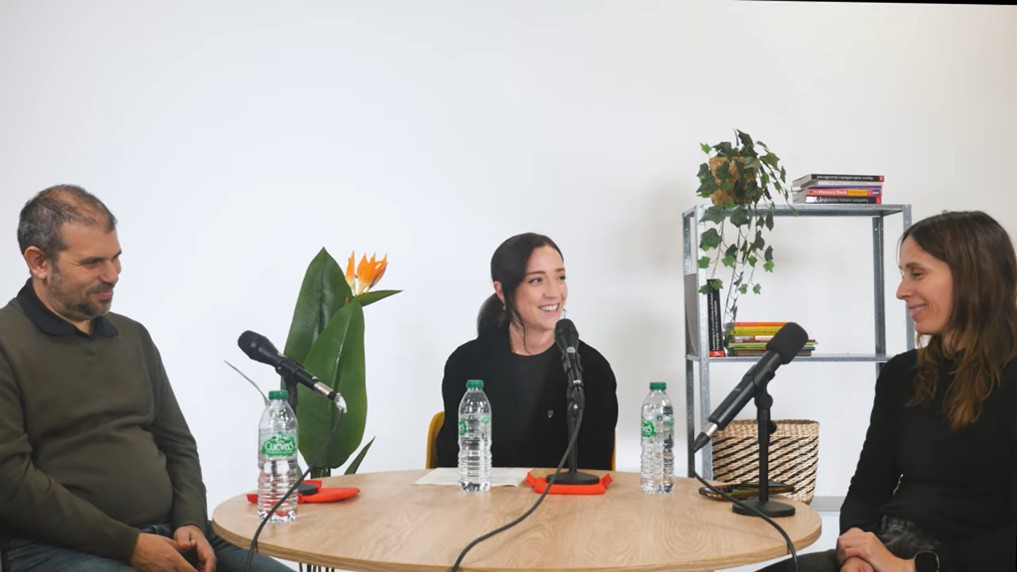
INFORMAL TALKS #05 explores the link between labour informality and poverty in Argentina, questioning whether having a job is enough to ensure decent living conditions. Featuring Guillermina Comas and Juan Ignacio Bonfiglio, the episode reflects on inequality, multidimensional poverty and the limits of employment as a pathway to social inclusion.
In parallel, the INSEAI Testimony Collection released a new episode featuring Cristian Castillo (DESH Consultores, Colombia), offering insights into structural informality and labour dynamics in the Colombian context.
In addition to previous contributions, a new post was published on the INSEAI Blog by João Hallak Neto, focusing on the dynamics of labour informality in Brazil. Drawing on both Census and PNAD data, the contribution offers a comprehensive overview of informality as a phenomenon that is at once structural—deeply linked to territorial, racial and educational inequalities—and cyclical, evolving with labour market conditions. The post also reflects on recent advances in measurement and the importance of improving data tools to better inform labour and social protection policies.
These contributions reinforce the project’s commitment to bridging academic research and broader public debate.
Looking Ahead: Academic Networks and Conferences
Looking ahead, the network continues to consolidate second-year activities while expanding its academic outreach.
Following the Mid-Term Meeting, work will focus on strengthening ongoing research, aligning secondments with WP3 priorities and enhancing comparative outputs across regions.
The Second INSEAI Workshop ( University of Salerno ) has now closed its call for papers, and further information on selected contributions and programme details will be shared soon.
At the same time, the network will continue organising seminars, lectures and collaborative activities, maintaining the momentum of academic exchange built over recent months.
Secondment Chronicle
Academic exchange and field experience in Argentina , by José Luis Carreras.
(Reduced version)
I approached this secondment as a conventional academic stay, expecting to focus primarily on seminars, meetings and research exchanges. However, the experience quickly unfolded into something much richer, combining academic work with direct exposure to the social realities that shape labour informality.
During my time at ODSA–UCA, I participated in a range of academic activities, including presentations, discussions and collaborative exchanges with local researchers. These interactions allowed for a deeper engagement with different methodological approaches and analytical frameworks, particularly in relation to the measurement of informality, labour trajectories and social vulnerability.
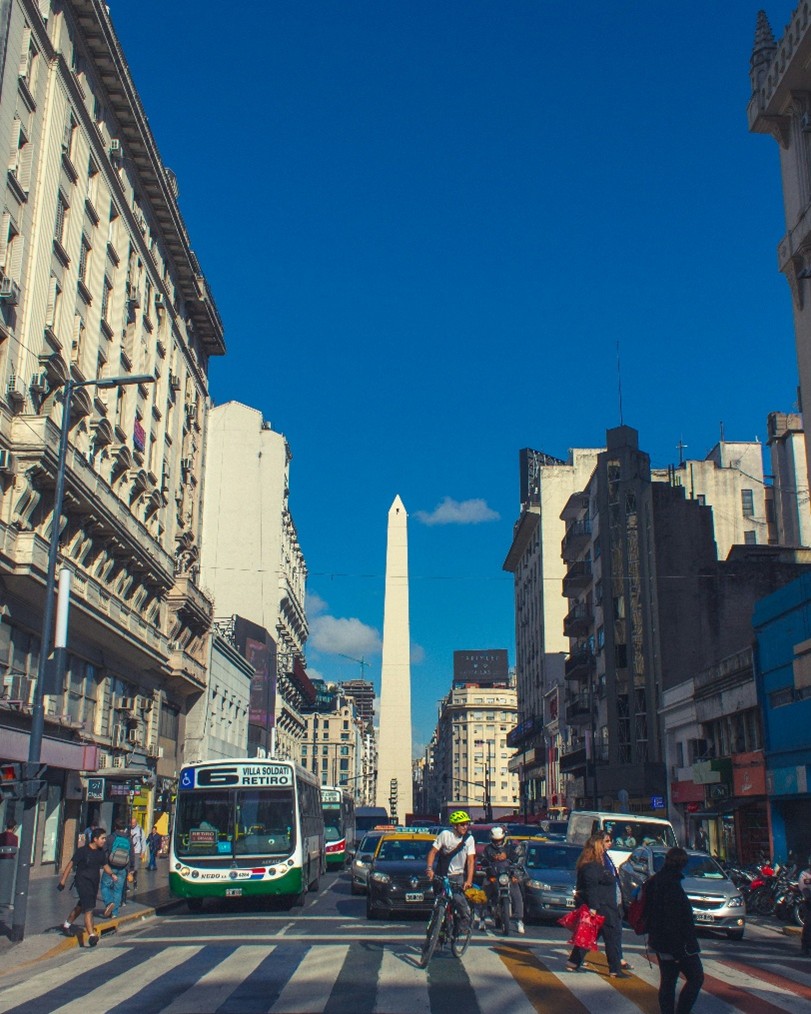
Field experience in Buenos Aires, where everyday urban dynamics offer a direct perspective on labour informality, inequality and the social realities shaping economic life.
At the same time, the secondment provided an opportunity to go beyond academic analysis. Contact with social actors and organisations working with vulnerable workers offered valuable insights into the everyday dynamics of informality. These experiences revealed how precarious labour conditions are embedded in broader processes of inequality, social exclusion and limited access to rights, highlighting the gap between formal regulatory frameworks and lived realities.
The comparative dimension of the exchange was particularly relevant. Dialogues between European and Latin American perspectives showed both shared structural challenges—such as labour fragmentation, instability and weak social protection—and important contextual differences shaped by institutional frameworks and development models.
Overall, this experience reinforced the idea that informality cannot be fully understood through theoretical or statistical analysis alone. It requires engaging with local contexts, incorporating diverse perspectives and recognising the structural nature of precarious labour dynamics. In this sense, secondments emerge not only as a tool for academic collaboration, but also as a key space for rethinking how we study and address informality
Cultural Corner: Recommended Reading
Robust Determinants of the Shadow Economy
(Sarsen Zhanabekov, Bulletin of Economic Research , 2022)
This recent study explores the key factors that explain why informal and shadow economies persist across countries. Rather than focusing on single causes, it shows how a combination of elements—such as unemployment, regulatory complexity and institutional quality—shapes the size of informal activity.
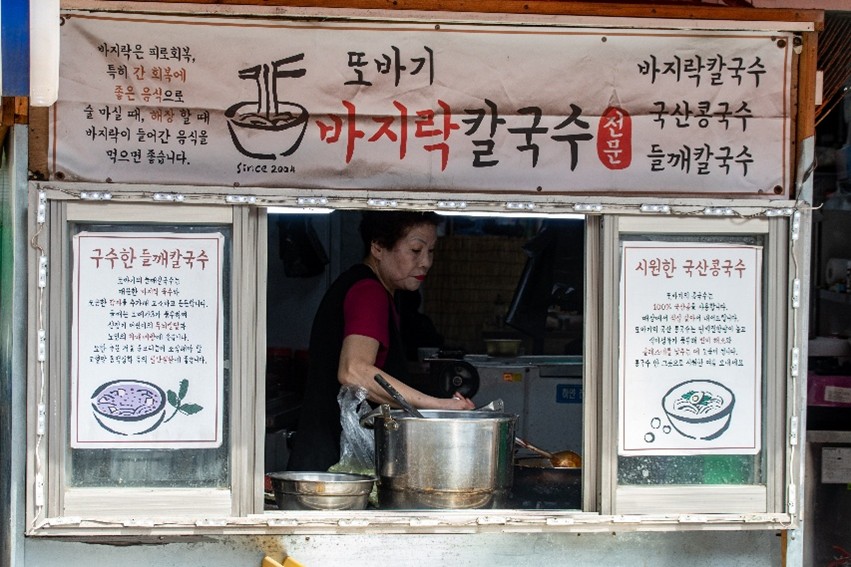
Street food vendors as a global expression of informal economies, where everyday work practices sustain livelihoods while operating beyond formal regulatory frameworks.
The findings suggest that informality is not simply a marginal phenomenon, but closely linked to how labour markets and institutions are structured. In particular, excessive bureaucracy and weak governance tend to reinforce informal practices, while stronger institutions and economic stability contribute to their reduction.
A useful contribution for understanding the structural drivers behind informality from a comparative perspective. A thought-provoking complement to more technical research on labour markets and formalisation policies.
Contact & Stay Connected
Website: www.inseai.eu
Email: newsletter@inseai.eu
LinkedIn: https://www.linkedin.com/in/inseai-project-471875371
Instagram: https://www.instagram.com/inseai.project/
Facebook: https://www.facebook.com/people/Inseai/61576239562950/
YouTube: https://www.youtube.com/@INSEAI-PROJECT
Spotify: https://open.spotify.com/
Calendar l Upcoming Events: https://www.inseai.eu/es/eventos
Newsletter: newsletter@inseai.eu
- Newsletter Team: Matías Membiela-Pollán (Coord.), Xose Picatoste-Novo, Sandrina Teixeira.

International Network for Knowledge and Comparative Socioeconomic Analysis of Informality and the Policies to be Implemented for their Formalization in the European Union and Latin America
Horizon Europe Project 101182756 — INSEAI 2023