
INSEAI Newsletter 2026/1 - January
Project & Network Highlights l January 2026
January opened the second year of the INSEAI project, with continuity in the network’s core activities and new priorities for 2026. The month combined a strong schedule of discussions—covering migration, territorial deprivation and labour trajectories in Argentina—with important operational milestones: the start of WP3, preparation of INSEAI Workshop 2, expanded use of simultaneous translation, and a renewed call to strengthen participation in the Employment and Wage Survey.
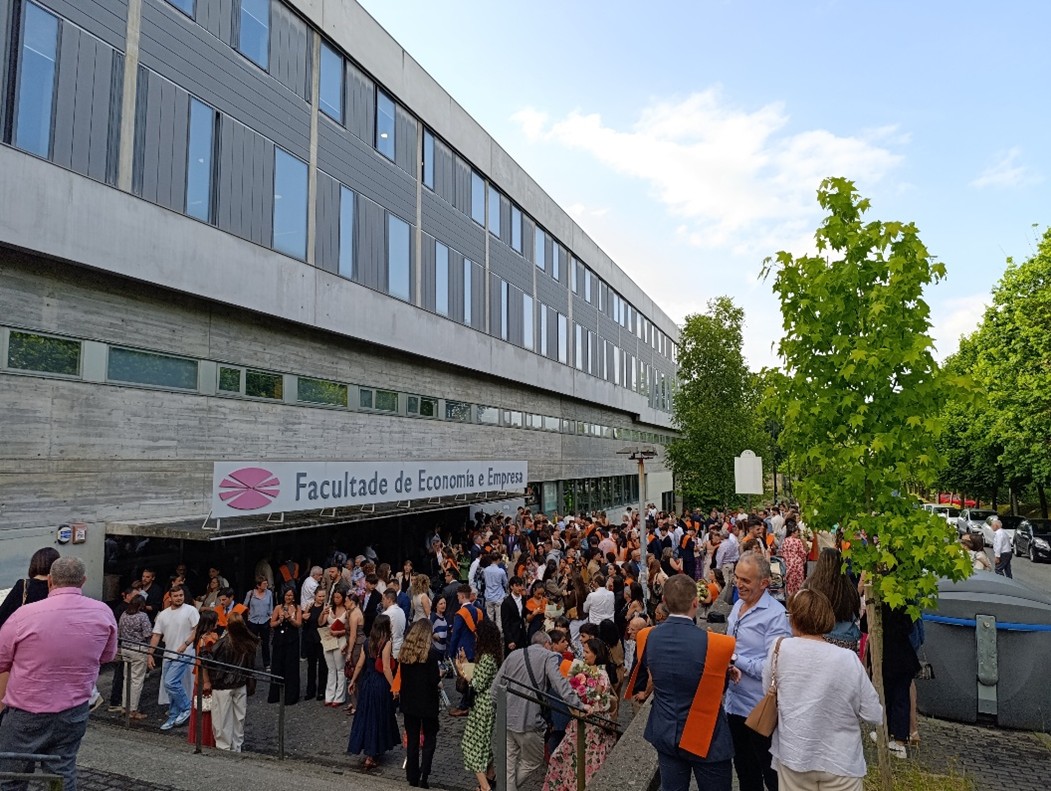
Universidade da Coruña, Faculty of Economics and Business, coordinator of Work Package 3 within the INSEAI project.
Network Cooperation: Learning and debating across universities
Second year of the project and WP3
The project enters its second year with the launch of Work Package 3, coordinated by Prof. Isabel Novo at University of A Coruña (UDC). WP3 focuses on the compilation of socioeconomic values and beliefs, and policy and institutional frameworks at national and international levels. Teams are encouraged to incorporate WP3 tasks into secondment work plans, aligning research stays with this thematic framework.
Research secondments in Salerno
During January, several researchers from Argentine partner institutions are carrying out research secondments at the University of Salerno (Italy) . Participants include Laura Golovanevsky (University of Jujuy) and Nazarena Bauso, Alejo Giannecchini, Valentina González and Agustina Paterno (Pontifical Catholic University of Argentina – UCA).
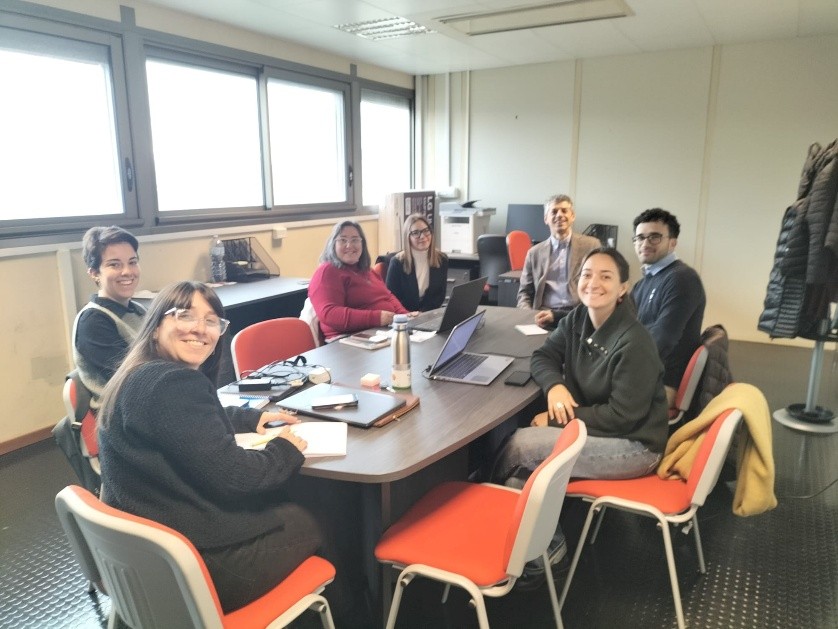
INSEAI researchers from Argentina during a research secondment at the University of Salerno.
These secondments contribute to ongoing collaborative research within the INSEAI project and support comparative work on labour informality across regions.
INSEAI Workshop 2: Call for Papers
Following the success of the first workshop series, INSEAI Workshop 2 has been convened and will take place at University of Salerno in a hybrid format . The theme will be: “Understanding Informality through Data: Empirical Approaches, Surveys and Emerging Evidence.” Network members are encouraged to submit papers and to circulate the call among colleagues who may be interested.
Simultaneous translation to widen participation
To support broader participation across the network, INSEAI has tested Google Meet simultaneous translation, which has shown good results. For members who need it, the option can be activated within Meet via the meeting tools/voice translation function (note: access requires a personal Gmail account). This feature is intended to help ensure that sessions remain accessible to all members, regardless of the language used by speakers
Discussion Series
January featured a dense programme of online/hybrid discussions—many linked to ongoing secondments—covering migration, informality dynamics and vulnerability.
Training Discussion (UNISA): Migration and structural informality in Colombia
On 13 January , Cristian Castillo , Emma Avila and María Moyano (DESH Consultores, Colombia) led a Training Discussion at University of Salerno (UNISA) and online: “Labor dynamics in times of migration crisis – The structural problem of informality.” The session challenged the idea that Venezuelan migration is the main driver of rising informality in Colombia, arguing instead that pre-existing “structural traps” explain most labour precariousness. The presenters discussed dynamic models, pseudo-panels and a “revolving door” mechanism that pushes workers into persistent informality.
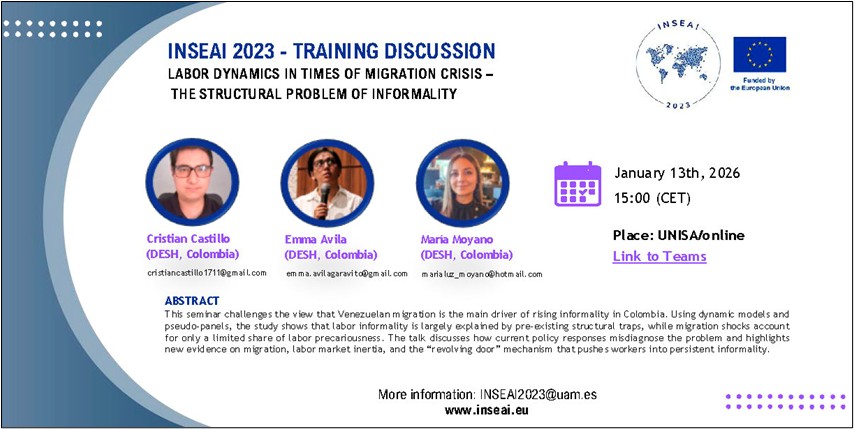
INSEAI Training Discussion on labour informality and migration in Colombia, January 2026.
On 30 January , Guillermina Comas (UBATEC, Argentina) presented: “Trajectories in informal employment and structural vulnerability in Argentina (2021–2024)” , in a hybrid session hosted at Universidad Autónoma de Madrid (UAM) and online. Using EDSA data and a labour trajectory approach, the presentation examined how prolonged informal employment accumulates vulnerability in urban households—often in ways that do not overlap neatly with income poverty. The session was held in Spanish, with automatic translation into English available for those who needed it.
Costa Rica-focused discussion
INSEAI Survey: Ongoing Data Collection
In January, the INSEAI Discussion Series also included a session on informal employment in tourism-related activities in Costa Rica’s Central Pacific region. The discussion examined working conditions, occupational health and environmental impacts, as well as institutional barriers to formalisation, drawing on mixed methods and multidisciplinary perspectives.
Data collection for the Employment and Wage Survey continues to be one of the project’s key priorities. Members are reminded to disseminate the link widely through their networks and to encourage “snowball” sharing (friends and connectors, posters with QR codes, social media, free survey-promotion platforms, and student networks). The coordinator’s message emphasised that the network is still on time to secure a substantial number of questionnaires—provided dissemination remains active and coordinated.
INSEAI Survey: Blog & Testimonies
January also brought new contributions to INSEAI’s online content. Two new entries were published on the INSEAI Blog . One of them, “Inside Rocinha: The Invisible Architecture of Informality and Resilience” , offers a field-based reflection on everyday informal practices and social organisation in one of Rio de Janeiro’s largest favelas. A second post reports on ongoing research activities and exchanges within the network, highlighting the role of secondments and comparative perspectives in INSEAI’s work.
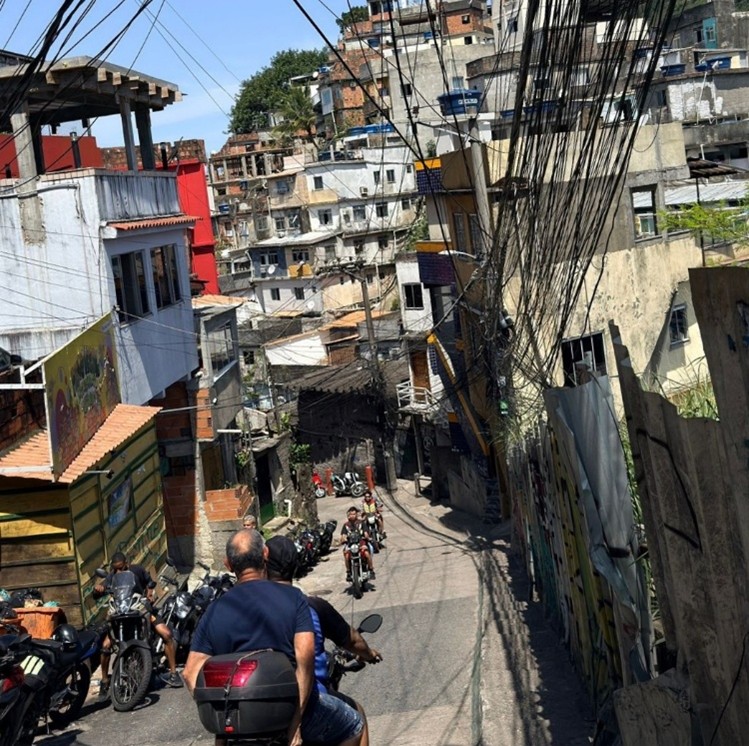
Street view in Rocinha, Rio de Janeiro, featured in the INSEAI Blog post ‘Inside Rocinha: The Invisible Architecture of Informality and Resilience’.
In addition, the INSEAI Testimony Collection released a new episode featuring the team from the Bucharest University of Economic Studies (BUES, Romania) . Led by Adriana AnaMaria Davidescu and joined by Vasile Strat, Diana Marina Agafiței and Maria Bianca Bolboasă, the testimony provides an overview of informality in Romania and the main institutional and labour-market challenges linked to it.
Looking Ahead: Academic Networks and Conferences
In February , the INSEAI Discussion Series will continue with a session focused on labour informality in Argentina , bringing together researchers from the Argentine Social Debt Observatory (UCA) to discuss recent methodological developments, comparative evidence and labour-market trajectories. The discussion will be held in a hybrid format, with simultaneous translation available.
More broadly, the coming months will see continued activity across the INSEAI network, including new discussion sessions, research secondments, survey fieldwork and preparation for upcoming workshops. These initiatives will further consolidate comparative research and collaboration on informality across regions and disciplines.
Cultural Corner: Recommended Reading
The Informal Economy . Colin C. Williams (Agenda Publishing, 2023) .
This concise and accessible book introduces the informal economy as a structural feature of contemporary capitalism rather than a marginal or temporary phenomenon. Drawing on examples from Europe and Latin America, it explains why informal work persists, how it interacts with formal institutions, and what this means for labour markets, regulation and public policy.
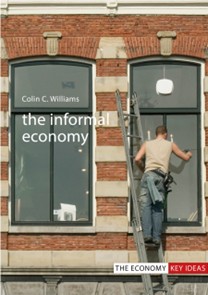
Cover of The Informal Economy.
Contact & Stay Connected
Website: www.inseai.eu
Email: newsletter@inseai.eu
LinkedIn: https://www.linkedin.com/in/inseai-project-471875371
Instagram: https://www.instagram.com/inseai.project/
Facebook: https://www.facebook.com/people/Inseai/61576239562950/
YouTube: https://www.youtube.com/@INSEAI-PROJECT
Spotify: https://open.spotify.com/
Calendar l Upcoming Events: https://www.inseai.eu/es/eventos
Newsletter: newsletter@inseai.eu
< >Newsletter Team: Matías Membiela-Pollán (Coord.), Xose Picatoste-Novo, Sandrina Teixeira.

International Network for Knowledge and Comparative Socioeconomic Analysis of Informality and the Policies to be Implemented for their Formalization in the European Union and Latin America
Horizon Europe Project 101182756 — INSEAI 2023