
INSEAI Newsletter 2025/1 - July
Project & Network Highlights l July 2025
During July 2025, the INSEAI project (inseai.eu) carried out a significant set of activities that contributed to the multidimensional characterization of labor informality in Latin America and Europe. Through seminars, empirical findings, and theoretical discussions, an analytically diverse agenda was consolidated, oriented toward linking structural, institutional, and territorial approaches with innovative methodological strategies.
One of the core focuses was the critical measurement of informality. The IISEC-UCB team (Bolivia), in particular, proposed a gender-sensitive indicator that considers unpaid care work and participation in the popular economy. This approach exposed structural inequalities affecting women in urban employment and their connection with the persistence of unregistered labor forms.
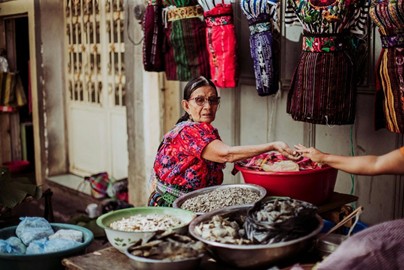
Street vendor in Latin America. Source: Pixabay.
Meanwhile, the relational interfaces between informality and formality were addressed. Klaus West (GEWAK, Germany) presented an approach centered on contact points among state, social, and labor actors, proposing communication tools to analyze and transform such interactions. These highlights the importance of recognizing informality not only as an economic phenomenon but also as a social system with its own symbolic and practical regulatory structures.
From Paraguay, Luis Ortiz (UNA) showed how social stratification and education levels shape trajectories into informal employment, using regression analysis applied to the 2024 EPHC data. His presentation underscores the need to integrate sociological variables into labor market analysis, particularly in contexts of deep structural segmentation.
Other spaces, such as informal labor linked to tourism in Porto (Portugal), provided insights into contemporary forms of informality connected to the commodification of public space. Additionally, Work Package 2 (UAM–UNISA) presented methodological advances in integrated measurement of the informal economy through surveys, choice experiments, and econometric models.
Finally, an internal survey of 21 project researchers revealed that most teams favor qualitative methods and territorial contact strategies, while facing barriers such as limited funding and difficulty accessing informal workers.
Overall, the July activities contributed substantively to a situated and relational understanding of informality, articulating empirical data, comparative perspectives, and methodological proposals. The diversity of approaches reinforces INSEAI’s interdisciplinary character and the need to continue producing contextualized knowledge to inform public policy recognizing the heterogeneity of informality across scales and contexts.
Five Approaches to Understanding Informality Today
Germany | Communication as a Bridge to Formality
Klaus West (GEWAK) explored the role of “capacity to act” not only as a statistical construct but also as a symbolic and strategic practice. His proposal includes an Atlas of Informal Exits, with audiovisual and narrative potential.

Diagram of social actor networks illustrating the relational interfaces between formality and informality — a key perspective proposed by Klaus West (GEWAK, Germany).
Bolivia | How Is Feminist Informality Measured?
Fernanda Wanderley and Arianne Villafuerte presented a gender-sensitive approach to informality measurement, highlighting unpaid care work and access to social protection as key dimensions. The result is an indicator that challenges conventional statistics and reveals profound asymmetries in urban employment.
Paraguay | Beyond Schooling: Is It Possible to Leave the Limbo?
Luis Ortiz (UNA) argued that education alone is not sufficient to reduce informality:
Social stratification largely determines labour outcomes. Ortiz's conclusions are supported by logistic regression models based on the 2024 Permanent Household Survey (EPHC).
Porto, Portugal | Normalized Tourist Informality
From the University of Alicante, Gabriel López and Javier Ortega examined how informality in tourist cities is not marginal but rather an integrated component of the urban experience.
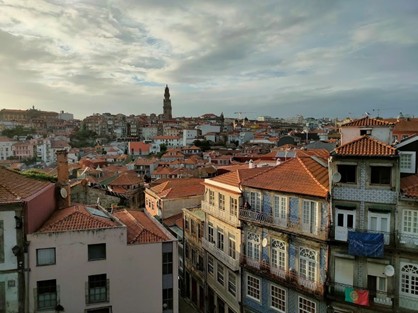
View of the city of Porto, which receives over five million tourists annually.
Mixed Methods | WP2 UAM–UNISA Agenda
The WP2 team presented a mixed-methods toolkit including anonymous surveys, choice experiments, and MIMIC models. This proposal aims to foster comparative measurement strategies that link empirical data to actionable policy design.
Methods and Barriers According to INSEAI
A survey of 21 project researchers revealed:
- A preference for qualitative methods (interviews, focus groups) due to their depth.
- Online and in-person surveys are the most viable quantitative strategies.
- Social media, WhatsApp, and territorial maps are emerging as new avenues for fieldwork.
- The most significant barriers: funding and difficulty recruiting.
Informality Beyond the Project
Cuba: Underground Informality and the Collapse of Consensus. The recent resignation of Cuba’s Minister of Labor, following controversy over statements minimizing poverty, reflects growing social tensions and the role of informal survival strategies in contexts marked by state inefficiency and scarcity.
Colombia: Labor Reform Targets Informality in Digital Platforms. Colombia’s new labor reform mandates that digital platforms formalize employment relationships and contribute to the national healthcare system. While praised by labor advocacy groups, some experts warn that increased costs may push companies toward regulatory evasion, potentially exacerbating informality.
Global Trends: Labor Rights and Pathways to Formalization. Over 60% of the world’s employed population works in the informal economy (ILO, 2023). Countries like India and South Africa are testing inclusion strategies—from digital registries for gig workers to income support models. Global institutions now advocate for flexible, context-sensitive pathways toward formalization.
Cultural Corner: Recommended Reading
The Informal Economy Revisited, edited by Martha Chen & Françoise Carré, brings together key research from Africa, Asia, and Latin America. It advocates for a paradigm shift that makes informal work visible as a central part of global economies. Also, A Modern Guide to the Informal Economy, by Colin C. Williams, offers a clear roadmap for formalization without criminalization: incentives, education, and adapted policies.
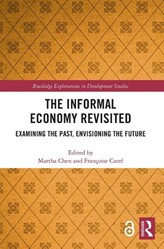
Source: Routledge - Taylor & Francis (2020).
Contact
Web: www.inseai.eu
Email: newsletter@inseai.eu

International Network for Knowledge and Comparative Socioeconomic Analysis of Informality and the Policies to be Implemented for their Formalization in the European Union and Latin America
Horizon Europe Project 101182756 — INSEAI 2023